MasterDiablo
Black Knight
- 2/1/05
- 18,615
- 157
Cái áo dài của Worst Misaka cách điệu gì chứ, bình thường mà, với cả ai nhìn kĩ thì nó là see-through đó :'> mà sao Misaka này "toa" thế nhỉ ? O_O


Follow along with the video below to see how to install our site as a web app on your home screen.
Note: This feature may not be available in some browsers.

Hỏi những người mặc áo dài xem nó thoái mái hay không thì biết nhémà sườn xám mặc sao thoải mái như áo dài đc nhỉ?

mà sao Misaka này "toa" thế nhỉ ? O_O


nói về sexy ... xin lỗi các bạn chứ thấy lúc trời mưa chưa? Sườn xám chỉ là muỗi so với áo dài


Một vài tài liệu quy kết việc ra đời của chiếc áo dài quốc phục là do những tham vọng riêng tư của chúa Nguyễn Phúc Khoát. Do muốn xưng vương và tách rời Đàng Trong thành quốc gia riêng, nên ban sắc dụ về ăn mặc như trên cho khác đi, không phải với người khách trú mà với Bắc triều (trong quy định này đã có cả chỉ thị phụ nữ phải mặc quần hai ống). Sau thấy quần hai ống khêu gợi quá, Vương mới giao cho triều thần pha phối từ mẫu áo dài của người Chăm (giống như áo dài phụ nữ Việt Nam ngày nay, nhưng không xẻ nách) và áo dài của phụ nữ Thượng Hải (chiếc sườn xám) để "chế" ra cái áo dài của phụ nữ Việt Nam (Xem thêm Liên kết ngoài, bài Sự Tích Áo Dài Việt Nam).

 . Sườn xám chỉ xuất hiện vào cuối đời Mãn Thanh và Dân Quốc mà thôi.
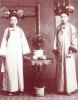
When the Manchu ruled China during the Qing Dynasty, certain social strata emerged. Among them were the Banners (qí), mostly Manchu, who as a group were called Banner People (旗人 pinyin: qí rén). Manchu women typically wore a one-piece dress that retrospectively came to be known as the qípáo (旗袍 or banner gown). The generic term for both the male and the female forms of Manchu dress, essentially similar garments, was chángpáo (長袍). The qipao fitted loosely and hung straight down the body, or flared slightly in an A-line. Under the dynastic laws after 1636, all Han Chinese in the banner system were forced to wear a queue and dress in Manchurian qipao instead of traditional Han Chinese clothing (剃发易服), under penalty of death (along with the July 1645 edict (the "haircutting order") that forced all adult Han Chinese men to shave the front of their heads and comb the remaining hair into a queue, on pain of death). Until 1911, the changpao was required clothing for Chinese men of a certain class, but Han Chinese women continued to wear loose jacket and trousers, with an overskirt for formal occasions. The qipao was a new fashion item for Han Chinese women when they started wearing it around 1925.
A woman in the traditional loose fitting baggy qipao worn with an over jacket
The original qipao was wide and loose. It covered most of the woman's body, revealing only the head, hands, and the tips of the toes. The baggy nature of the clothing also served to conceal the figure of the wearer regardless of age. With time, though, the qipao were tailored to become more form fitting and revealing. The modern version, which is now recognized popularly in China as the "standard" qipao, was first developed in Shanghai in the 1920s, partly under the influence of Beijing styles. People eagerly sought a more modernized style of dress and transformed the old qipao to suit their tastes. Slender and form fitting with a high cut, it had great differences from the traditional qipao. However, it was high-class courtesans and celebrities in the city that would make these redesigned tight fitting qipao popular at that time.[2] In Shanghai it was first known as zansae or "long dress" (長衫 - Mandarin Chinese: chángshān, Shanghainese: zansae, Cantonese: chèuhngsàam), and it is this name that survives in English as the "cheongsam".
The modernized version is noted for accentuating the figures of women, and as such was popular as a dress for high society. As Western fashions changed, the basic cheongsam design changed too, introducing high-necked sleeveless dresses, bell-like sleeves, and the black lace frothing at the hem of a ball gown. By the 1940s, cheongsam came in a wide variety of fabrics with an equal variety of accessories.

hơi lạc chủ đề chút nhưng mình muốn kiếm phần không lời của bài aodai...
it has lyrics for Gettouka, but not for Ao Dai. Why? I have no idea what are they chanting in that song.
That is very strange. I was going to ask about the lyrics for that track as well.
Listening to Ao Dai's inflections, it seems to be in one of the Indochinese (Khmer, Laotian and Vietnamese, even Thai) side of things.
Not the first time such a language has been used in an anime OST, last I heard there was some Vietnamese in Paprika.
ý tớ là cái phần nhạc nền của nó...
không phải lyrics, tiếng việt mà, cần gì lyrics

 , mất hết mịe nó cái duyên áo dài

uh, mà cũng chả rành cái phần tách nhạc nền nên chịu luôn rồièo xin lỗi nha Cơm nhầm :(.
mà mấy bài ost kiểu như ao dai khó có nhạc nền riêng lém- trừ khi mình dùng phần mềm làm nhạc nền riêng....

 nói vậy cũng ko phải made in China :) vote cho Saya