-Tin mới từ web của Fallout 3 :
SeanMike nêu vấn đề giả định cho Fallout 3
Sequels and You
Categories: GamersInfo fun, Gaming for adults, The Joys of Design | Written by: SeanMike
Okay, so we’ve talked about previews. Now let’s talk about sequels.
Possibly one of the bigger issues when it comes to sequels is not the fact that there are so many of them, but rather that companies seem to insist on calling additional games sequels when they’re only loosely tied into the first one.
Let’s look at the different types of sequels:
1. The Direct Sequel
The direct sequel is fairly straight forward. Typically the same studio/company does each sequel, they tie into the previous games, and have similar game play. Look at, say, the Brothers in Arms games, the Halo series, Diablo 1 & 2. Each might have refinements and improvements in gameplay, but they’re telling an interlocked (or continuing) story. In Mercenaries 2, one character, a Chinese colonel, comes back from Mercenaries 1, but is now promoted and a general. He’s an NPC, but you’ve got the same “main characters” that the player can pick from the original, too.
These are true sequels. They’re like good movie or book sequels – not when the studio says “let’s add more of the same!” to something, but rather when they concentrate on making a solid contribution to the on-going storyline.
(Halo Wars makes for more of the re-imagined sequel, down below, though it’s a prequel (technically), and manages to keep – from what we’ve seen so far – a lot of the same feel.)
The key to the direct sequel is keeping it separate from the rote sequel if the direct sequel does, in fact, ****. That’s not uncommon, both in movies and in video games. Tenchu Z is a sequel to the original Tenchu: Stealth Assassin game, and even features incredibly similar gameplay. However, where the original was a classic stealth game and featured innovative gameplay for the time, the sequel – well, it just kind of sits there. What was innovative back however many years ago is by now stale, and the story, while moving previous main characters into supporting roles, is technically a sequel, it’s droll and derivative.
2. The Rote Sequel
Some games, by their nature, just require sequels. Much like the direct sequel, they typically feature gameplay that slowly improves over time, though at some points – usually when they jump up a generation in platform – you’ll see some dramatic changes.
The best examples of these will typically be sports games. If you’ve played Madden one year, you can play it the next, often with some small changes to the gameplay. These could be bad (the cone of vision in Madden) or they could be good (new shot control in Tiger Woods).
Or, they could be done really badly, like the incredible changes in crash modes between Burnout 2 and Burnout 3. The racing modes of those games featured a solid improvement, making 3 definitively better in racing – but the changes in crash mode made a lot of players yearn for the second game, rather than the third, something a publisher does NOT want.
You could argue that some of the World War 2 games end up in this cycle. Medal of Honor, for instance, and Call of Duty have had a number of sequels, some by different companies.
In movie terms, these would be the movies that get made because the first one did so well. “Hey everybody! We made a blockbuster! Come up with a sequel or two – NOW!”
3. The “Re-imagined” Sequel
These are the ones that when they get called a sequel they, in my opinion, often hurt the industry. The reason is that it confuses the fans and increases the disconnect between the developers and players unless it’s done in a very clear, dramatic fashion.
Fallout can make a good example of this. Fallout Tactics was quite a different game than Fallout 2. This was clear from the get-go, and while there may have been complaints about the gameplay in Fallout Tactics, it typically wasn’t that “it’s so different than Fallout 2!”
(At least, generally. The more fanatical of fans will find something to complain about in any kind of sequel of this manner, but most development companies can count on them to complain no matter what, and typically to buy the game no matter what.)
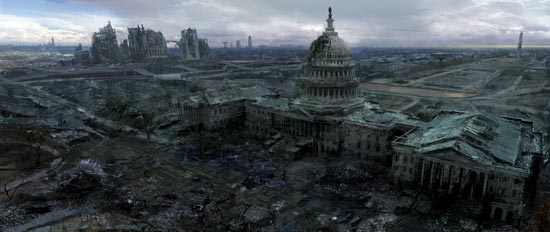
On the other hand, Fallout 3 is being called a sequel to Fallouts 1 and 2, and I think that’s a disservice to the games. While, technically, it is a sequel to the Fallout RPGs, it’s not a direct sequel. It’s set in a different area, with different characters, a different time, a different engine and a different style of RPG gameplay.
That’s what I feel like is causing a lot of the issues amongst the Fallout community right now. When you change something as minor as the type of engine some kind of car had in a game that you’re calling a direct sequel, you’re forcing either a ret-con (a retroactive change to continuity) in the original, usually beloved, game, or you’re doing something wrong.
On the other hand, if the game had come out as just “Fallout”, and Bethesda had said “Hey, we’re starting from the beginning and re-imagining the game in a number of ways” – well, the more die-hard fanatical fans will still complain, because they want the game they’ve always dreamed of (and aren’t going to get unless they can program themselves, because everyone wants something slightly differently and the company is looking for something that will sell the most among the population in general, not just the fans of the previous games). However, changing the engine of the cars, or the location of the Vault, or what have you, won’t matter so much, because it’s a similar, yet subtly different world.
On the other hand, some games can get re-imagined and improved upon. The original Area 51 shoot ‘em up games in the arcades were fun, but rather cheesy, with the jump up “good guys” that you couldn’t shoot and were poorly videoed, as was popular back on those days. Midway remakes Area 51 as a first person shooter, and instead of trying to make it just like the old game, or claiming it’s a sequel to the first game, they just use the same basic story and update it to modern sensibilities.
Best of all, you can then throw in the homage to the original game. The E3 sample level had a great example of that – a brutal “boss battle” with the player’s character as the door gunner in a helicopter, shooting it out with a boss who fired slow moving projectiles back at him, much like the bosses in old light gun arcade games used to do. THAT is the kind of thing that a fan of the original games can look at and say “hey, cool!” while not denigrating (necessarily) from the experience of someone new to the series. Of course, if I remember correctly, Midway also did the original games, so it didn’t go to a new developer like Fallout did (from Interplay to Black Isle Studios to Bethesda).
But you can still screw things up with the same developer, if only for a sub-set of the fans.
No one can argue that World of Warcraft is anything but a huge success, at least financially. Blizzard says they have over 9 million subscribers now – the game has changed the world of MMORPGs forever and probably made them a ton of money, not to mention the cultural impact it’s had even outside of the gamer universe.
On the other hand, this complete change to the Warcraft universe – from real time strategy game to MMORPG – also drastically changed the lore and the feel of the universe. People who were big fans of the lore complain when they see “big bad guys” from the novels or games turned into raids on “farm status” for loot. To them, the MMORPG has so irrevocably changed the canon – the universe – of the Warcraft world that unless a new RTS completely ignored the MMORPG it couldn’t be the same.
For instance, look at paladins. In Warcraft 3 they used group heals and never used swords, only hammers. (Yes, Arthas used a sword, and became a deathknight.) In World of Warcraft, they often use swords and have individual heal spells.
You could list a ton of other examples of this – just mentioning Star Wars Galaxies should be good enough for shudders out of any Star Wars fan in the audience.
4. The Exception to the Rule
You know what they say – there’s an exception to every rule. Not all sequels can be defined this way.
For instance, look at the jump between Duke Nukem 2 and Duke Nukem 3D. DN2 was a side scrolling adventure game. DN3D, on the other hand, was a first person shooter – and quite a popular one at that, at least in my neck of the woods when it came out. Even with the drastic shift in viewpoint, from 2D to 3D and from side scrolling to first person, it had the same atmosphere as the previous ones and was a direct sequel in terms of story.
Let’s look at another example. Everquest 2 is the MMORPG sequel to the immensely popular Everquest. It’s the same world, just further in the future and after a dreadful apocalypse.
Is it the same game? Well, at least as far as I can tell, it’s a different gameplay, definitely. It’s the same universe. It doesn’t preclude anything from the first game, and so doesn’t require any ret-conning. Does that make it a direct sequel? Or is it a re-imagining? Or a rote sequel?
Honestly, I don’t know.
Likewise, Call of Duty 4 moves the venerable Call of Duty engine from World War 2 to the modern day. You could call it a direct sequel, as the modern day is, after all, 60 years past the end of World War 2 (and CoD wasn’t exactly alternate history – WW2 still ended the same way).
But it’s also a different game. Where it might matter is if any of the characters are descendents of the characters from the previous Call of Duty games (one may be, I cannot remember) or just homages to them.
So that leaves a lot of questions up to you. Mention them in comments or on our forums.
Do you prefer direct sequels, rote, or re-imagined?
Do you think WoW should be a separate universe as the Warcraft RTS games?
Would you be more accepting of Bethesda’s Fallout 3 if it wasn’t being touted as a direct sequel but rather as a re-imagining of the original?
What games do you think have been ruined by their sequels, and what type of sequels were they?
Is a good sequel as good as an innovative original game? Better? Worse?
Website chính thức của Fallout 3 có link sau :
http://fallout.bethsoft.com/
___________________________
-Tin mới từ web của Fallout 3 :
Pete Hines nói về Fallout 3
Interviews// Bethesda's Pete Hines: The E3 '07 Fallout 3 Interview
Link to this:
http://spong.com/feature/1010962425 Jul 2007 17:59
by Adam Hartley
"War. War never changes."
Fallout 3 was the game of E3 2007. Pretty much everyone who saw the brain-meltingly awesome demo at this year’s show is in agreement on this.
Fans of the original Fallout games and fans of role-playing games really have no choice in this – they are going to have to spend the next fifteen months soaking up every last morsel on Fallout 3 while they patiently wait to play it when it gets released in late 2008. Let’s also not forget the legions of casual (or lapsed) role-playing fans out there – many of whom Bethesda has managed to rope back in with the mighty Oblivion in recent years.
Hell, once you have seen Fallout 3 you will soon realise that this is not even a genre game. The storyline, the characters, the graphics, the combat system, the mind-blowing attention to the smallest details all scream it. I walked out of the E3 demo of Fallout 3 shortly after conducting the interview below, and I had a sh*t-eating grin on my face the likes of which I seriously cannot remember since I first saw Half Life 2 some years back.
That’s what I think, but what does Peter Hines (pictured), vice president of public relations and marketing for Bethesda, think?
SPOnG: Before we talk more about Fallout 3, what are your general impressions of the new E3 format?
Pete Hines: Well, I actually love it! This is my favourite E3, ever. But then I have the benefit of not actually having to leave this lovely hotel – I actually get to sleep in the same building that my booth is in, so it's much easier and much more convenient. I definitely appreciate the tighter focus on press stuff and not being so crazed with all those other folks we used to have to deal with. It just fits better with what it is we like to do, which is nice presentations of the big stuff we have going on. The press response seems to be mixed – I mean, obviously having to jump from hotel to hotel is pretty inconvenient, but some people seem miss that loud, chaotic insanity from past years!
SPOnG: For those that don’t really know about the history of Fallout – can you give us a quick potted history?
Pete Hines: The original Fallout was released in 1997, developed by Black Isle Studios for Interplay. The team changed a little, some of the principals from that team left, and Fallout 2 was made by a slightly different team. F2 was put out in 1998 and then, after that, there were a couple of what you might call ‘derivative’ games: there was a Brotherhood of Steel game that was kind of like a hack‘n’slash – it was supposed to be kind of like Baldur’s Gate: Dark Alliance but in the Fallout universe. There was a Fallout Tactics game, which captured the turn-based strategy part – but there’s been no true Fallout game, no true role-playing game in the Fallout series since 1998. So, it’s been sitting around for a long time with nothing happening.
A lot of us here were – are - big fans of Fallout, and we finally said, “Well if nobody else is going to do another one, why don’t we do it?”. So, we went out and acquired the rights to do it and we’ve been working on it since 2004, in some way, shape or form – and now we’re finally at a point where we can start showing you guys where we’re up to.
SPOnG: Do you have any of the guys from the original Fallout or Fallout 2 teams involved?
Pete Hines: No, it's our team. Mainly the Oblivion team.
SPOnG: What’s the whole deal with rabid Fallout fanboys desperately worried that Fallout 3 is not going to be a proper RPG?
Pete Hines: Well, at its core Fallout 3 is definitely a role-playing game. If you are of the opinion that any Fallout RPG has to be exactly like the games that came out in 1997 and 1998 down to every feature and detail, that’s definitely not the game we are making. We are trying to make a true successor in the Fallout franchise, something that is a true role-playing game that immerses you in this world, and hopefully brings out the best of what that series is about – which is great tone and setting and themes and characters and player choice… You know, it’s a really interesting, special role-playing system.
If folks are interested in a new Fallout game (as opposed to being slavishly interested in a specific list of demands relating to Fallout or Fallout2); or [they] are just interested in role-playing in general but may not have played the original games; or they are just looking for the next big RPG or the next big RPG coming from Bethesda… we certainly hope all of those folks are interested in what we are up to with Fallout 3.
Nobody enters, nobody leaves
SPOnG: I suppose the mere fact that there are still ardent Fallout fans out there speaks volumes for the enduring quality of the first games.
Pete Hines: Yeah, not just the quality, but how different the original games were for their time, you know? They really broke the mould of all of the classical fantasy stuff being done around that time.
Bethesda had just put out Daggerfall around that time (1996) for example. Fallout really cut against the fantasy grain and did some pretty unique things: with full facial animations, lip-syncing and that kind of thing. It definitely resonated and has stuck with folks – both rabid and non-rabid; both those who have talked about it every day of their lives since it first came out, and those who just really liked it and can’t wait to play another one.
SPOnG: Have you considered bundling versions of those earlier Fallout games with Fallout 3?
Pete Hines: No. They are still out there. Interplay still has the ability to sell and distribute those. They are also based on a completely different generation of hardware and operating systems. It can be difficult to get that stuff to run. We’re basically moving forward with where we want to take it and not re-treading stuff that came out nearly ten years ago.
SPOnG: Okay, the storyline really is key in Fallout 3. When is it set? Can you give us an overview?
Pete Hines: The bombs fell in 2077, so its set 200 years after the bombs fell. Basically it is the story of your character who is born in the Vault. You spend the first part of the game, your entire life to that point, in the Vault. So, you flash through different periods of your early life, and at every step of the way your father, who is played by Liam Neeson, is there. So, you see yourself as a baby, you see yourself at ten years old, and so forth. You are creating a character, as well as learning a bit about the game and doing some quests and stuff.
Then one day you wake up and it’s your nineteenth birthday and your father is gone. Nobody in over two hundred years has ever entered or left the Vault – so this is a shocking thing not only to you but to everybody in the Vault.
The overseer who is in charge of the Vault is obviously very upset that somebody has broken the cardinal rule, “Nobody enters, nobody leaves”, and also he thinks you have something to do with your father’s disappearance - of course, you don’t.
You have no idea why he left. You expected him to be there and he’s not. So this is kind of the jumping off point. The overseer’s thugs are out to get you and you basically figure out a way to break out of the Vault like your father did to go in search of him.
“What was so important? Why did he leave me behind? What did he need to go and do? Where is he?” These are the questions you ask yourself and these are your reasons for leaving the Vault and venturing out into this post-nuclear wasteland.
SPOnG: Any other well-known guys doing voice-overs in addition to Liam Neeson?
Pete Hines: Yep, Ron Perlman (Hellboy) is the narrator – he was the narrator in the first two games. Those are really the only two guys we’re talking about right now.
There are also other iconic things from the series in Fallout 3 from the first two games such as The Ink Spots, who were this great band from the 1940’s and 50’s era who did the theme-song for the original games . We licensed one of their most popular tracks – the one that the original developers wanted to use in the original Fallout but couldn’t get the rights to. So that’s the I Don’t Want To Set The World On Fire tune, from the teaser trailer, and also from where the game starts.
So, its little things like this. We’re big fans of the series and what it did and what it was about and we want to stay as true as possible to everything – sound effects, voiceover, music, whatever it is.
SPOnG: Why use 1940’s and 50’s style music?
Pete Hines: So the set-up for Fallout is that basically the world as we know it splits off from our current timeline after World War II and diverges on a different timeline and the future that they go on is basically that whole kind of ‘Leave It To Beaver’ '50s idea of ‘tomorrow-land’ – so what they thought the future was going to be like back then, with robot-maids and rocket-cars and jetpacks and laser rifles and so on [doesn't go away]. So that 40’s and 50’s stuff doesn’t go away.
It just continues on through their history. Until the bombs fall in 2077. So it's really just a tomorrow-land version of the 50s that’s all blown to hell!
And then when you come back into this destroyed world you still have people trying to preserve their 1950s hairstyles and listening to the same music and whatnot – that’s ‘the shtick’ of it – its not the timeline that we are on now that gets blown up, its all about this completely separate alternate universe where it's all about nuclear powered this and fusion-generators and stuff.
Liam Neeson is the impetus for the majority of the main quest
NadiaSPOnG: What was it like working with Neeson?
Pete Hines: Oh, he’s brilliant. He’s such a good mimic! You see him get into this character, you put the script in front of him and it really is just like – all of a sudden – he becomes this completely different person. He’s talking to you like you’re an infant, then he’s talking to you like you’re sixteen. His ability to change in a moment [clicks fingers] – he’s such a good actor.
He also brings a great presence to this very important role of the player’s father in the game. Patrick Stewart, we used in Oblivion, but we always said that the whole story of Oblivion is that the emperor is killed and you have to find his son – so we kinda told you “He’ s going to die really early and you need to find his heir.” Whereas in this game Liam Neeson is the impetus for the majority of the main quest – it’s about finding your father, finding out what he is up to, finding out if you can help him.
SPOnG: There is a lot of talk about how next-gen formats allow for more emotional depth in videogames, but a lot of people seem to perhaps overlook the importance of storyline and character – would that be a fair point?
Pete Hines: I certainly think that storytelling in general is one of the areas where our industry has the most room for improvement. It is certainly something that we are keenly aware of in Fallout and something we are trying to spend more time on. When you do a game as big as Oblivion – with literally thousands of characters – it is really tough to make every single one of those memorable and special and give them a lot of depth. Whereas, in Fallout, it’s a much smaller scope.
We’re talking about hundreds of NPCs rather than thousands. So we can spend a lot more time crafting those characters, their personalities and their dialogue and we really hope that folks will get excited about what we’ve done in this area.
SPOnG: How many guys do you have working on the writing side of things?
Pete Hines: Probably about the same size team we had working on Oblivion. We have a group of designers who are focused entirely on quests and dialogue. Then we have a group of designers who are focused on levels and – for lack of a better word – ‘dungeons’ and that sort of thing.
SPOnG: One of the features in Fallout 3 that really stands out is V.A.T.S. (Vault-tec Assisted Targeting System) – can you explain how this works?
Pete Hines: V.A.T.S. was really born out of a desire to make the game work best as a first-person game – remember that the original games were third-person with turn-based combat. We feel that first-person is the most immersive way to put a player in a world. However, at the same time we wanted something that stayed as true as possible to role-playing. We don’t want something that rewards the ‘quick-twitch’ FPS player. We’re not trying to reward players who are good at Call of Duty or Halo or whatever.
We want the skills and abilities of your character to determine success or failure. So, one of the things we’ve included is this V.A.T.S. mode allows you to stop time and queue up moves for your character to implement, in almost a compressed time mode. And then we play it out in a cinematic fashion.
So, at any point in the game you can pause it and spend action points to target any particular point on a creature or creatures that you might be fighting. So, you might aim to shoot one guy in the leg to aim to slow him down as he runs to attack you with his melee weapon, while at the same time aiming to shoot this other guy in the arm so that he’s less accurate with his weapon, while you might aim to shoot a third guy in the head for a quick kill – and then you press a button and the game acts out all that stuff for you in a cinematic mode. Over time your action points are recharged. You get to make moves based on how many action points it takes to fire a certain weapon, or whatever the case may be.
So, it’s really a way of giving you a chance to pause the action, take stock of situations and make smart choices about who you are going to target. You know, a lot of shooters you play, there’s ammo all over the place. Whereas in this game, you’re in a post-nuclear wasteland. You can’t just go down to the local ammo shop and buy as much as you want. You have to scrounge for what you need to survive. You have to conserve ammo and resolve the battles as smartly as possible. A combination of the skills of your player and the conditions of your weapons determines how likely you are to hit the particular body parts of your enemies.
Giant ants and rat scorpions
CyrusSPOnG: What kind of weapons do you get? What types of baddies will you come across?
Pete Hines: You start of with nothing when you leave the Vault, but you scrounge around and find hunting rifles and Chinese assault rifles and laser rifles – there’s a whole range of different types of weapons, small and big, energy weapons, that kind of thing.
As for the baddies, there are a lot of creatures that are drawn from the original games. Then there are a number of new ones. Your biggest foes in the game are these super-mutants that are invading the world and are in a constant battle to push humans out. You’ll find all kinds of weird mutated creatures in the game from giant ants through to rat scorpions. You have to ask yourself “What has radiation done to all these creatures that were in this world before the bomb fell?” So you can imagine the kinds of strange mutants you’ll encounter.
SPOnG: Talking about killing and violence, what do you think of the whole Manhunt 2 debate at the minute? Are you concerned by this whole increased media and political focus on the effects of very violent videogames?
Pete Hines: Well, for us, it is all a matter of context. Our game is not a game where all you do is violently kill human beings one after the other. That might be part of the game or it might not be. You know, you might choose to role-play a particular type of character who, as much as possible, chooses to avoid conflict and avoid combat.
You might want to use your speech skill, for example, to try to resolve potential conflicts peacefully wherever possible. So, we are not a ‘you are going to kill lots of things very violently’ game.
If you choose to play the game violently, then so be it, but it is in the context of this much larger role-playing game where you are talking to people and solving problems and buying and trading things.
The same thing could be said for Oblivion. You could do nothing but run around and fight things with swords if you wanted to. But that’s not the entire game – there’s loads of other stuff to do, NPCs to talk to, potions to make, flowers to pick, lots of other stuff! It’s very important that violence within our games is seen in the context of the overall game.
In the case of Manhunt 2 the context was – and I’ve not played the game, but based on what the ratings boards have said – it’s just that non-stop killing one after the other after the other. At least that’s my impression of it. That’s not the case for us.
SPOnG: Sure, it’s a totally different type of game. However, in Fallout 3 you have said that the ‘moral behaviour’ of your character is very important.
Pete Hines: Yeah, it’s huge. In Fallout one of the big things is that the number of quests you have is much smaller than in Oblivion, but all of those quests have a much greater number of ways in which they might be solved. So, in Oblivion, if you were playing a certain type of character… say if you were an evil guy, you would lean towards the ‘Dark Brotherhood’ quests.
Whereas in Fallout it is more like you are presented with these various quests and you choose how you want to resolve them: are you going to be a nice guy? A mean guy? Or are you going to be in that ‘grey area’ in-between, where you are not entirely sure if you feel good about your actions? You are presented with these ‘moral dilemmas’ – and you, the player, will make these decisions on a quest-by-quest basis.
SPOnG: There has been a lot of speculation about this ‘Corpses Eaten’ statistic that we can see in the game from the current demo you are showing – does this mean that you can play as a zombie in the game?
Pete Hines: We’re not talking about ‘Corpses Eaten’ right now [smiles]. There is an awful lot of stuff that we still have to tell folks about Fallout 3. Don’t forget that we are not coming out till Fall 2008 – we have a long way to go still!
SPOnG: Great stuff. Thanks for your time Pete!
Pete Hines: No worries. Now let me show you this new demo. You’ll like this.
Website chính thức của Fallout 3 có link sau :
http://fallout.bethsoft.com/





![[Rest In Peace] Panzerklein](/data/avatars/m/245/245380.jpg?1410517359)


