

Navigation
Install the app
How to install the app on iOS
Follow along with the video below to see how to install our site as a web app on your home screen.
Note: This feature may not be available in some browsers.
Thêm tùy chọn
Style variation
-
[THÔNG BÁO] CẢNH BÁO LỪA ĐẢO MẠO DANH QUẢN TRỊ VIÊN
Chào các thành viên GameVN,
Dạo gần đây tình trạng lừa đảo scamming và phishing đang gia tăng. Ban quản trị GameVN xin lưu ý toàn bộ thành viên:
KHÔNG/ ĐỪNG / CẤM cho bất kỳ ai tự xưng là quản trị viên của server vay tiền.
Mọi hành vi lân la làm quen, tự tiện nhắn tin trên Discord, Facebook, Zalo hoặc các nền tảng mạng xã hội khác,
núp bóng dưới danh nghĩa sinh hoạt của quản trị viên, đều có tỉ lệ rất, rất cao là lừa đảo.
Nếu có tài khoản lạ add friend hoặc nhắn tin xin tiền dưới danh nghĩa admin:
Block ngay
Report ngay
Không chuyển khoản, không cung cấp thông tin cá nhân
Quản trị viên của forum và Discord server GameVN không có nhu cầu vay tiền thành viên.
Không có lý do nào để admin chủ động kết bạn rồi xin tiền.
Mọi thông báo chính thức chỉ được đăng trên kênh thông báo của server và topic chính thức trên forum.
Tin nhắn riêng từ tài khoản lạ không phải thông báo của ban quản trị.
Cảm ơn các bạn đã chú ý và cùng giữ cộng đồng an toàn.
— Ban quản trị GameVN
Tắt thông báo bằng nút X bên góc phải của bảng thông báo*
You are using an out of date browser. It may not display this or other websites correctly.
You should upgrade or use an alternative browser.
You should upgrade or use an alternative browser.
Hình ảnh xe tăng, pháo trong các trận đánh lịch sử
- Thread starter hello_kitty
- Ngày gửi

akitebanhmi
Legend of Zelda
- 20/2/12
- 911
- 8
Quote đức để đâu vậy? Quăng đúng 1 dòng cụt lủn mà cũng cần phải quote cả đống ảnh kia à
Load với kéo chuột cho vui
 1 cách troll hợp pháp
 kiendong69
Mr & Ms Pac-Man
- 19/4/12
- 180
- 2
Các Von toàn tập thì i sì nhau thôi: nghiêm nghị, ngầu ngầu, ngu ngơ...
Chỉ có bác Guderian là hóm hỉm, hề hề...
Nụ cười của bác này nổi tiếng trong thời đó lắm, giới lính tráng Đức Quốc xã thời đó thấy mặt bác Gu là lên tinh thần liền he he.
Bác này cũng có nhiều slogan hay lắm, để rãnh kiếm lại làm chữ kí cho giống bác chim sắt chơi.
Btw thanh bác nhiều.
Chỉ có bác Guderian là hóm hỉm, hề hề...
Nụ cười của bác này nổi tiếng trong thời đó lắm, giới lính tráng Đức Quốc xã thời đó thấy mặt bác Gu là lên tinh thần liền he he.
Bác này cũng có nhiều slogan hay lắm, để rãnh kiếm lại làm chữ kí cho giống bác chim sắt chơi.
Btw thanh bác nhiều.
Last edited by a moderator:
kiendong69
Mr & Ms Pac-Man
- 19/4/12
- 180
- 2
Đại loại như:
"You hit somebody with your fist and not with your fingers spread" - bắn nó bằng 128mm chứ đếch thèm drum 90mm.
"The engine of the Panzer is a weapon just as the main-gun" - già mà ngựa, chắc khoái ngồi VK 2801 đi đua xe lắm
"There are no desperate situations, there are only desperate people" - lạc quan dữ hé, hông biết có nhớ câu này bữa 30/4 hôn ?
"You hit somebody with your fist and not with your fingers spread" - bắn nó bằng 128mm chứ đếch thèm drum 90mm.
"The engine of the Panzer is a weapon just as the main-gun" - già mà ngựa, chắc khoái ngồi VK 2801 đi đua xe lắm
"There are no desperate situations, there are only desperate people" - lạc quan dữ hé, hông biết có nhớ câu này bữa 30/4 hôn ?

The Iron Eagle
Sam Fisher, Third Echelon Agent
- 4/8/06
- 15,245
- 331
Đại loại như:
"You hit somebody with your fist and not with your fingers spread" - bắn nó bằng 128mm chứ đếch thèm drum 90mm.
"The engine of the Panzer is a weapon just as the main-gun" - già mà ngựa, chắc khoái ngồi VK 2801 đi đua xe lắm
"There are no desperate situations, there are only desperate people" - lạc quan dữ hé, hông biết có nhớ câu này bữa 30/4 hôn ?
"You hit somebody with your fist and not with your fingers spread" -->tập trung lỰc lượng công địch chứ đỪng phân tán ra( trong game từng thằng lên chết để mìNh dc Pool medal
 )
)"The engine of the Panzer is a weapon just as the main-gun"-->câu này hợp nhất với mấy thằng súng lởm chuyên flank nè
"There are no desperate situations, there are only desperate people"-->luôn phải bình tĩNh trong những thời khắc khó khăn nhất

- 29/7/10
- 11,721
- 8,358
[video=youtube;EHFxoZoDl0s]http://www.youtube.com/watch?feature=player_detailpage&v=EHFxoZoDl0s[/video]
Tròn 1 phút 1 viên, kể từ lúc bế em đạn khỏi thùng đến khi tọng thuốc giật cò bùm: 3:31 - 4:30, chậm hơn T92 có tẹo à
Mấy bác cho hỏi là sau khi máy nó đẩy viên đạn vào nòng thì mấy ông loader tống thêm cái gì vào nữa vậy????
The Iron Eagle
Sam Fisher, Third Echelon Agent
- 4/8/06
- 15,245
- 331
Thuốc phóng, vì đạn to quá nếu làm nguyên quả đạn thì quá nặng, nên phải chia ra làm 2, nạp đầu đạn trước rồi thuốc phóng sau
Mấy bác cho hỏi là sau khi máy nó đẩy viên đạn vào nòng thì mấy ông loader tống thêm cái gì vào nữa vậy????
Bao nhiêu tiền 1 viên đó vậy ta
The Iron Eagle
Sam Fisher, Third Echelon Agent
- 4/8/06
- 15,245
- 331
quân Ý dùng tháp pháo A13, Matilda làm lô cốt


quân đoàn Châu phi của Đức (tạp nham vcd )


quân Đức ở nga dùng Universal carrier cướp dc từ LX

quân Đức ngồi trước Churchill cướp dc ở trận Kursk

quân đoàn Châu phi của Đức (tạp nham vcd
)
quân Đức ở nga dùng Universal carrier cướp dc từ LX
quân Đức ngồi trước Churchill cướp dc ở trận Kursk
Chỉnh sửa cuối:
The Iron Eagle
Sam Fisher, Third Echelon Agent
- 4/8/06
- 15,245
- 331
Italian army (trích phim Lion of the Desert 1978)


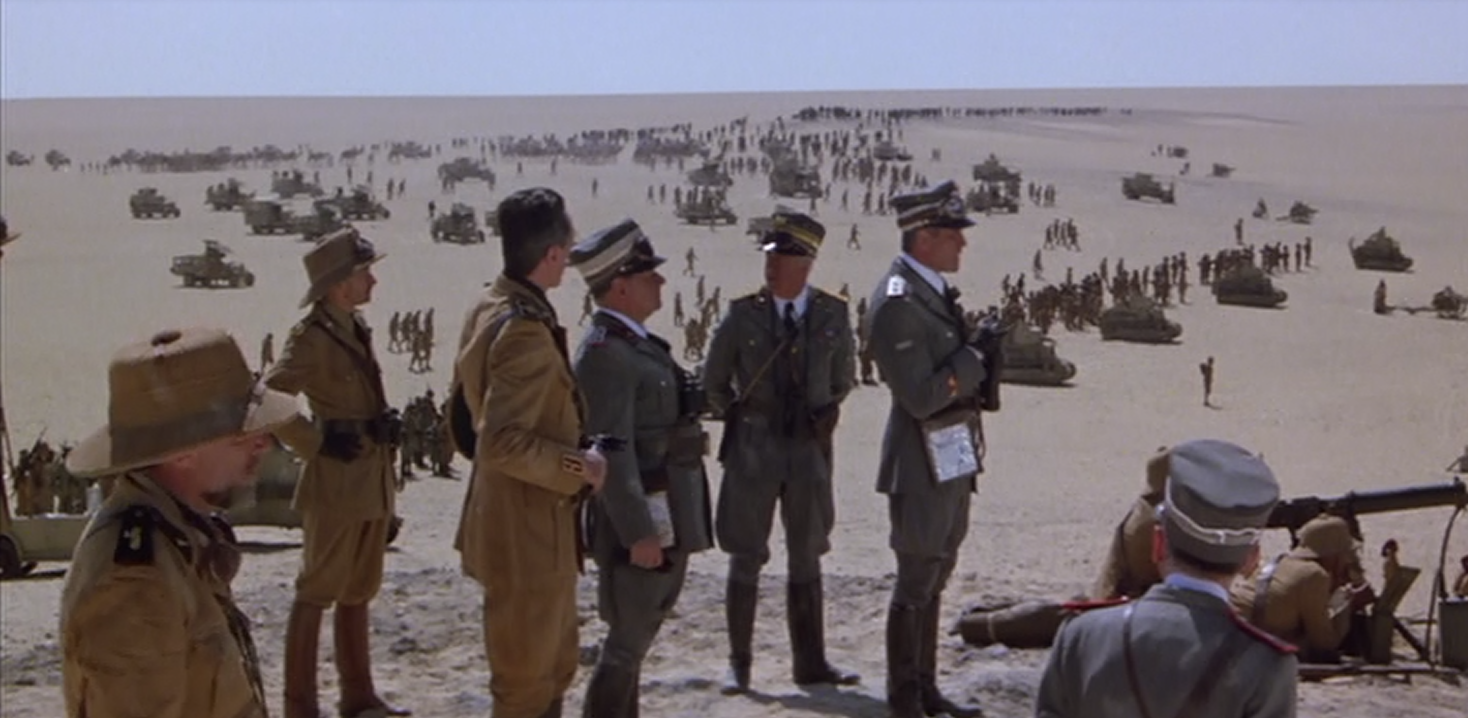


(trích phim Lion of the Desert 1978)
Chỉnh sửa cuối:
vanlacondo
C O N T R A
- 27/3/09
- 1,693
- 5
trong chiến tranh thế giói lần 2 thì liệu tank đúc có thật sụ là huyền thoại không? Hay chỉ dc cái mác tinh xảo công tủ nhà giàu, Vì đọc trong các tài liệu thì thấy tank đúc nhiều khi hỏng hóc liên tục.Chả bù cho t-34, sáng bị bắn toét ra, chiều thấy nhong nhong chạy

assassinXIII
Mr & Ms Pac-Man
- 12/4/09
- 270
- 0
e thấy sức mạnh của tank Đức thì chắc không phải bàn cãi rồi,cái đấy đã được những nhân chứng sống sót kể lại,chính vì quá tinh xảo,tập trung vào kĩ thuật mà bỏ qua tính tiện dụng nên tank Đức mới nhiều hỏng hóc vậy,còn tank Nga tập trung vào sự tiện dụng,dễ sử dụng,dễ bảo trì bảo dưỡng,tất cả là do quan điểm chiến tranh của 2 nước thôi
vanlacondo
C O N T R A
- 27/3/09
- 1,693
- 5
e thấy sức mạnh của tank Đức thì chắc không phải bàn cãi rồi,cái đấy đã được những nhân chứng sống sót kể lại,chính vì quá tinh xảo,tập trung vào kĩ thuật mà bỏ qua tính tiện dụng nên tank Đức mới nhiều hỏng hóc vậy,còn tank Nga tập trung vào sự tiện dụng,dễ sử dụng,dễ bảo trì bảo dưỡng,tất cả là do quan điểm chiến tranh của 2 nước thôi
thật là trái nguọc, nguòi đúc vôn thục dụng nhu vậy thì đáng nhẽ phải làm tank hiệu quả cao chú nhỉ?
The Iron Eagle
Sam Fisher, Third Echelon Agent
- 4/8/06
- 15,245
- 331
trong chiến tranh thế giói lần 2 thì liệu tank đúc có thật sụ là huyền thoại không? Hay chỉ dc cái mác tinh xảo công tủ nhà giàu, Vì đọc trong các tài liệu thì thấy tank đúc nhiều khi hỏng hóc liên tục.Chả bù cho t-34, sáng bị bắn toét ra, chiều thấy nhong nhong chạy
T-34 chủ yếu là dc SX nhiều nêu phụ tùng thay thế nhiều, cơ cấu dễ sửa
còn nhược điểm T-34 cũng nhiều: ko có radio, tháp pháo 2 người
http://chris-intel-corner.blogspot.fr/2012/07/wwii-myths-t-34-best-tank-of-war.html
WWII Myths - T-34 Best Tank of the war
The Soviet T-34 tank is well known by anyone who has an interest in WWII history. Books, articles, documentaries present it in triumphant terms. It was superior to everything the Germans had, it had revolutionary sloped armor, unprecedented mobility and was one of the reasons the Soviet side won in the Eastern front.
How realistic are these statements? Was the T-34 really a war winning weapon? How did it compare to German and Western tanks? How did it perform during the war? If we try to answer these questions by looking at actual data then things start to change. Instead of a mechanical marvel we get a poorly designed and built combat system that suffered horrific losses against ‘inferior’ German tanks.
Let’s start with debunking some of the most common statements.
The revolutionary design of the T-34
The T-34 was supposed to be the first tank that employed sloped armor. This characteristic meant that the armor protection was significantly enhanced, compared to straight armor, without adding extra weight. However French tanks of that period like the SOMUA S35 and the Renault R35 also had sloped armor.
Moreover there were several problems created by the sloped armor in the front, the rear and the back of the vehicle. This choice seriously diminished the interior space of the T-34. Tanks are always crowded on the inside. The T-34 however had a huge problem when it came to interior space.
The limited space not only affected crew performance but turned the T-34 into a deathtrap. A US study from the Korean War (based on the T-34/85 that was roomier than the T-34/76) concluded that due to the limited internal space a penetration by an A/T round usually led to the destruction of the tank and loss of 75% of the crew. In the Sherman the figure was only 18%.
German tanks like the Pz III and Pz IV had a conventional hull design but they also used slope in the middle part of their front hull armor. The new Panther tank was the first German tank to have a fully sloped hull front and sloped sides however the armor layout did not limit interior space like in the T-34.
The turret also suffered from a lack of space. It was so cramped that it affected movement. American experts who examined a T-34 at the Aberdeen testing grounds in 1942 had this to say:
‘The main weakness is that it is very tight. The Americans couldn't understand how our tankers could fit inside during a winter, when they wear sheepskin jackets’
Serious design flaws
Apart from the limited internal space there were two more serious design flaws.
One was the lack of turret basket (a rotating floor that moves as the turret turns) for the loader. This meant that the person loading the shells had to follow the movement of the gun and at the same time keep an eye on the floor so he doesn’t trip on the spent casings.
The other major issue was the two-man turret which forced the commander to also act as the gunner. This drastically limited combat performance as the commander could not focus on leading the tank but instead had to engage targets.
A three-man turret was finally introduced with the T-34/85 in March ’44.
Automotive performance
Christie suspension
The Christie suspension used on the T-34 had the advantage that it allowed for high speeds on road. Its disadvantages were that it took a lot of internal space and it had poor stability in rough terrain.
A German test of tank pitching motion at the Kummersdorf testing facility (1km undulated track) showed that the T-34 had the worst stability compared to the Pz IV, Tiger, Sherman and Panther.
The Christie suspension was a technological dead-end and the Aberdeen evaluation says: ‘The Christie's suspension was tested long time ago by the Americans, and unconditionally rejected’. It was replaced in postwar Soviet tanks with the torsion bar system, same as the T-34M and T43 prototypes intended to replace the T-34 during the war.
Problematic gearbox
Another major problem was the unwieldy gearbox. It had poor reliability and it needed excessive force to change gears, leading to driver fatigue. An American study of a captured T-34/85 from Korea noted:
'There is rough steering due to the use of clutch and brake steering control and difficulty in shifting due to the use of a spur gear clash-shift transmission and multi-disc dry-clutch, making driving this tank a difficult and very fatiguing job.’
Powerful gun?
The T-34 had a large caliber gun. The initial version was the L-11 76mm of 30.5 calibers. This was quickly replaced with the F-34 76mm of 42 calibers and the T34/85 had the ZiS S-53 85mm of 54.6 calibers.
The caliber numbers look impressive. After all the main German tank of 1941-43 Pz III had a 50 mm gun and that of 1943-45 Pz IV had 75mm. However Soviet tank guns suffered from low velocity leading to poor penetration and accuracy at long ranges.
For example the initial round velocity (m/s) for the Soviet guns (using the standard A/T round) was: L-11 - 612, F-34 - 655 (a German test with Pzgr39 ammo showed 625), ZiS S-53 - 792. The comparable German stats were: KwK 38 L/42 - 685, Kwk 39 L/60 - 835, Kwk 40 L/43 - 740, Kwk 40 L/48 - 790, Kwk 42 – 925.
The KwK 40 75mm used by the Pz IV and Stug from mid 1942 had far better penetration performance and accuracy than the F-34 and the Panther’s KwK 42 was also superior to the ZiS S-53 85mm in the same areas.
Lack of radio
Initially only the unit commander’s tank had a radio. In the course of the war radio was used more widely but even in 1944 many tanks lacked a radio set. The lack of radio meant that Soviet tank units operated with little coordination.
Visibility problems
German combat reports show that T-34 tanks had serious difficulties in navigating terrain and identifying targets. The problem was that the vision devices made it hard for the driver and the gunner to see what was happening.
This problem was addressed during the war.
The T-34 ‘1941 version’ lacked the vision cupola found on German tanks. This equipment gave the commander a 360o view of his surroundings. Also the optics were of poor quality.
The T-34 ‘1943 version’ had a larger turret and a German style cupola.
The T-34/85, introduced in March ’44, had a new large turret and the German style cupola.
Reliability problems
The T-34 was supposed to be a simple and rugged vehicle that seldom broke down. Authors like to compare it to the more complex German tanks that supposedly broke down often. The concept of the T-34 as a reliable tank is another myth of WWII.
The majority of vehicles in 1941 were lost due to equipment malfunction. The same reliability problems continued during the period 1942-44.
There were constant problems with the gearbox and the engine filters. The Aberdeen evaluators noted:
‘On the T-34 the transmission is also very poor. When it was being operated, the cogs completely fell to pieces (on all the cogwheels). A chemical analysis of the cogs on the cogwheels showed that their thermal treatment is very poor and does not in any way meet American standards for such mechanisms.’
‘The deficiency of our diesels is the criminally poor air cleaners on the T-34. The Americans consider that only a saboteur could have constructed such a device’
Apparently the air filter problem was never fixed. A US study of a captured T-34/85 from the Korean War (built in 1945) noted ‘Wholly inadequate engine intake air cleaners could be expected to allow early engine failure due to dust intake and the resulting abrasive wear. Several hundred miles in very dusty operation would probably be accompanied by severe engine power loss.’
The mental image of the T-34 travelling hundreds of kilometers without stopping is fantasy. The 5th Guards Tank army in 1943 lost as much as 15% of its tanks during its march to Prokhorovka. In August ’43 the 1st Tank army lost 50% of its tanks due to malfunction.
All WWII tanks had a hard time when travelling and they needed repairs and maintenance or they broke down.
There is also the question of standardization. The T-34 was produced at several factories. Each factory produced a slightly different variant. Could spare parts from Nizhny Tagil be used on a T-34 from Gorky? Doubtful.
The cheap T-34
One of the major characteristics of the T-34 was its low cost. This supposedly was the reason the Russians were able to build so many, while the Germans insisted on building expensive and thus limited numbers of tanks. Let’s take a look at these two statements.
Price
The concept of ‘cheap’ or ‘expensive’ has no meaning in a command economy. The reason being that the pricing mechanism is controlled by the government. If Moscow wanted a weapon to cost x amount of roubles it would cost x amount. Command decisions were made at the top and did not take into consideration free market concepts like return on investment, opportunity cost etc etc
The same issues affected, in a lesser way, the German, US and British war economies.
This makes it impossible to directly compare weapon systems by looking at the official prices. In general trying to compare the costs of weapon systems built in different countries under a command economy is very hard and prone to errors. Even using other indicators such as man-hours and input of raw materials can be misleading.
Just to give an example the ‘cheap’ T-34 had an aluminum engine. The Germans with more industrial assets than the SU and significantly higher aluminum production reached the conclusion that they could not provide their own tanks with an aluminum engine. It was simply too costly for them. This shows the different capabilities and priorities that countries have.
A better way is to compare prices of products in the same economy. This shows that the T-34 was much cheaper than the KV-1 and IS-2 tanks.
Also production costs and man-hours went down during the war. In 1941 8.000 man hours were needed to produce one T-34, this was reduced to 3.700 in 1943. Price in rubles went from 430.000 in 1940 to 168.000 in 1944.
Mass Production
The second major issue is whether the mass production of the T-34 was due to its imaginary low cost.
The reality is that the T-34 was built in huge numbers because the SU had built (with American assistance prewar) huge production facilities. These gigantic facilities in the Urals were the reason for the mass production.
The Germans also took advantage of gigantism when they built the Nibelungenwerk factory in Sankt Valentin, Austria. This greatly expanded Pz IV production.
They also built the ‘expensive’ Panther in huge numbers (for their standards) in the period 1943-45. It was not the ‘cost’ of the Panther that allowed them to do so but the industrial assets assigned to it.
The Americans built staggering numbers of M4 tanks in their tank arsenals, not because the M4 was intrinsically cheap but because gigantic facilities were provided for its construction.
Quantity vs quality
When looking into whether a weapon system is cheap or expensive the price is only one factor. The other one and I think the more important one is its performance. Is it better to build 100 cheap tanks or 50 expensive ones? The price difference might be significant but that about the other costs?
100 cheap tanks will need twice the crews and twice the fuel as the 50 expensive ones. They will also need twice the spare parts. If 50 tanks require 25 supply trucks then the 100 will need 50. You get the idea.
Then there is the aspect of losses. A cheap but poorly designed tank system will suffer more losses than an expensive but well armed and armored one. Machines can be mass produced but what about trained crews? A tank force that has limited crew casualties will have many tank aces and even the rest will be able to perform well in combat. On the other hand a country that builds large numbers of inferior tanks will lose them quickly, together with their crews. This will create a downward spiral as inexperienced crews will make up the majority of crews and thus severely limit the capability of the armored force.
The endless stream of T-34 tanks
Another myth is that there were hordes of T-34’s attacking the German formations. A simple look at the Soviet tank strength at various points in the war shows that the T-34 was not the most important tank. The light tanks T-60 and T-70 and the tank-destroyer SU-76 made up the majority of AFV’s in 1941-42 and even in 1943-45 the T-34 comprised roughly half of the Soviet frontline AFV force. In summer 1941 there were only 967 T-34’s in the total strength of 22.000 tanks. For the rest of the war:
Just a bit under 45.000 lost during the war! War-winning indeed…
Total Soviet AFV losses in 1941-45 were 96.600. That’s not a typo. Almost one hundred thousand vehicles.
For comparison’s sake a German document posted at AHF lists tank losses in the East from 1941-44 as 15.673 and total AFV losses (tanks, Stug, self-propeled guns etc) as 23.802.
Chỉnh sửa cuối:
thật là trái nguọc, nguòi đúc vôn thục dụng nhu vậy thì đáng nhẽ phải làm tank hiệu quả cao chú nhỉ?
Thế theo bạn tank của nước nào có hiệu quả cao =.=. Gì chứ con Panther của Đức được coi là 1 trong những con tank hiệu quả nhất trong thế chiến đấy

unreal2005
The Warrior of Light
- 29/6/08
- 2,143
- 107
@vanlacondo  Bạn ko hiểu rồi, người Đức từ xưa đến nay chú trọng đến sự hoàn hảo và tinh xảo, vì vậy những sản phẩm thủ công hay máy móc họ làm đều đạt độ bền và chất lượng tốt nhất với những vật liệu cao cấp. Động cơ và các các chi tiết chuyền động của xe Tiger, Panther có tuổi thọ 1-2 năm, trong khi đó các chi tiết máy móc của xe LiênXô chỉ có tuổi thọ vài tháng. Mỉa mai thay là tuy tuổi thọ cao nhưng xe Đức tồn tại không quá vài tuần trên chiến trường, trong khi LienXô liên tiếp bổ sung tank mới và sửa chữa những tank còn hoạt động được.
Nếu có nguồn cung cấp vật liệu và nhiên liệu đầy đủ thì cỗ máy chiến tranh của Đức khá hoàn hảo. Tuy nhiên khi Mỹ quyết định nhảy vào cuộc chiến thì mọi thứ thay đổi.Và chúng ta có thế giới hòa bình như hôm nay.
Bạn ko hiểu rồi, người Đức từ xưa đến nay chú trọng đến sự hoàn hảo và tinh xảo, vì vậy những sản phẩm thủ công hay máy móc họ làm đều đạt độ bền và chất lượng tốt nhất với những vật liệu cao cấp. Động cơ và các các chi tiết chuyền động của xe Tiger, Panther có tuổi thọ 1-2 năm, trong khi đó các chi tiết máy móc của xe LiênXô chỉ có tuổi thọ vài tháng. Mỉa mai thay là tuy tuổi thọ cao nhưng xe Đức tồn tại không quá vài tuần trên chiến trường, trong khi LienXô liên tiếp bổ sung tank mới và sửa chữa những tank còn hoạt động được. Nếu có nguồn cung cấp vật liệu và nhiên liệu đầy đủ thì cỗ máy chiến tranh của Đức khá hoàn hảo. Tuy nhiên khi Mỹ quyết định nhảy vào cuộc chiến thì mọi thứ thay đổi.Và chúng ta có thế giới hòa bình như hôm nay.
The Iron Eagle
Sam Fisher, Third Echelon Agent
- 4/8/06
- 15,245
- 331
Đức là nước ko có nguồn dầu hỏa thiên nhiên như LX và Mỹ, cả hệ thống phụ thuộc vào xăng tổng hợp. Có người bảo tại sao Đức ko tập trung những xe tank tốt, ổn định như Pz IV và dồn tiền vào tank gặp sự cố kỹ thuật như Tiger hay Panther làm gì...Điều đó hoàn toàn đúng, nhưng với điều kiện nước Đức sau khi sa lầy ở LX thì cả bộ máy Đức ko thể kham nổi điều đấy: 10 tank thì ngốn xăng hơn 1 tank, 10 tank cũng có nghĩa là cần 10 lần số lính lái xe. Trong khi LX dc Mỹ,và đồng minh viện trợ hàng loạt về nguyên nhiên liệu và phương tiện chiến tranh và có 1 lượng nhân lực khổng lồ thi Đức hoàn toàn phụ thuộc vào lượng tài nguyên trên các lãnh thổ chiếm dc. Do bị giới hạn về tài nguyên và nhân lực nên Đức ko thể đánh xả láng lâu dài như Mỹ và LX dc. Sau thất bại ở Kursk thì Đức ko còn khả năng phản công lớn do kiệt quệ. Thiệt hại quá lớn ở mặt trận phía Đông ko thể bù đắp kịp đẩy Đức vào con đường nghiên cứu những siêu vũ khí với hy vọng lật ngược tình thế, nhưng điều đấy càng đẩy Đức xuống hố nhanh hơn do công nghệ vũ khí dù tiên tiến nhưng chưa đủ trưởng thành....
Chỉnh sửa cuối:
Thế theo bạn tank của nước nào có hiệu quả cao =.=. Gì chứ con Panther của Đức được coi là 1 trong những con tank hiệu quả nhất trong thế chiến đấy
Hoàn hảo nhẩt chứ không phải hiệu quả nhất. Hiệu quả còn ở khả năng sản xuất, bảo trì. Mà cái này thì t-34 là nhất.
Trên thực tế 2 loại chiến xa hiệu quả nhất của Đức là StuG và Panzer IV bởi đây là 2 mẫu xe đơn giản nhất mà vẫn đủ sức đối đầu với thiết giáp của đồng minh.
Chỉnh sửa cuối:
Similar threads
- Trả lời
- 0
- Đọc
- 165
- Trả lời
- 0
- Đọc
- 289