China has a long history of
mounted archery (shooting on horseback). Prior to the
Warring States period (475–221 BCE ), shooting from chariot was the primary form of battlefield archery. A typical arrangement was that each chariot would carry one driver, one halberder, and one archer. Eventually, horseback archery replaced chariot archery during the Warring States period. The earliest recorded use of mounted archery by Han Chinese occurred with the reforms of
King Wuling of Zhao in 307 BCE. Despite opposition from his nobles, Zhao Wuling's military reforms included the adoption of archery tactics of the bordering
Xiongnu tribes, which meant shooting from horseback and eschewing
Han robes in favor of nomadic-style
jodhpurs.
[11]
For infantry, the preferred projectile weapon was the
crossbow, because shooting one required less training than shooting a bow. As early as 600 BC, Chinese crossbows employed sophisticated bronze trigger mechanisms, which allowed for very high draw weights.
[12] However, crossbow trigger mechanisms reverted to simpler designs during the
Ming dynasty (1368–1644 CE), presumably because the skill of constructing bronze trigger mechanisms was lost during the Mongolian
Yuan dynasty (1271–1368 CE).
[13] Nonetheless, infantry archery using the bow and arrow still served important functions in training as well as naval battles.
[14]


 Công thành mềnh thấy xài catapult bắn đá/lửa là chủ yếu, vừa dam vật lý vừa dam morale, range lại lớn không bị bọn thủ thành nó đập lại, tất nhiên nếu bọn thủ nó cũng gắn catapult trên thành thì nó lại có ưu thế hơn

 nhưng mỗi cái sau đấy thì truyện không thấy đề cập đến nỏ nữa
  ))
))
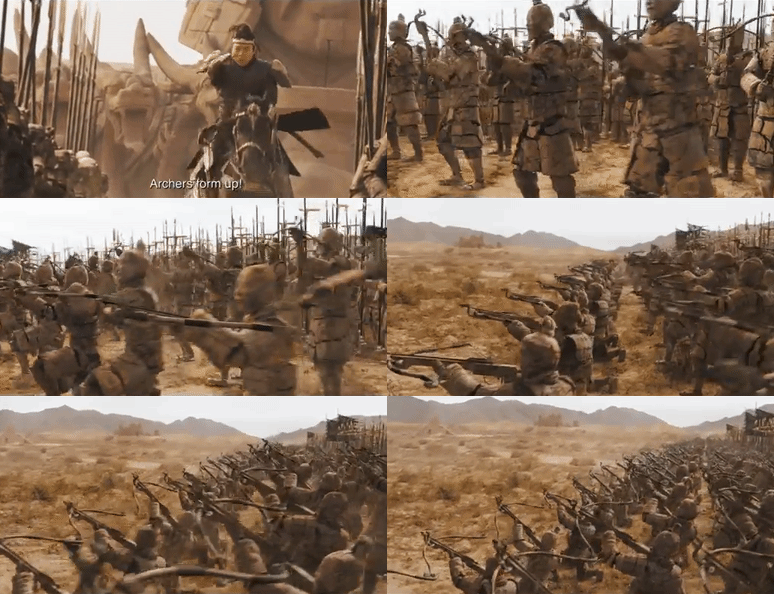


 Cơ mà đếu hiểu sao rải tên đã đời rồi tự nhiên rút quân, chắc là bị main char aura dọa nên rút về


