- 16/5/08
- 8,407
- 16,029
Vừa định post ...


Follow along with the video below to see how to install our site as a web app on your home screen.
Note: This feature may not be available in some browsers.
Tắt thông báo bằng nút X bên góc phải của bảng thông báo*
Vừa định post ...


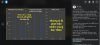
Cook số bằng cách test ít đi. Tỉ lệ nhiễm/test đang tăng lên chứ k hề giảm đi.Mỹ chắc cũng qua đỉnh rồi nhỉ, giờ toàn 25, 26k
Có nguồn về số test ko bạnCook số bằng cách test ít đi. Tỉ lệ nhiễm/test đang tăng lên chứ k hề giảm đi.
https://www.worldometers.info/coronavirus/Có nguồn về số test ko bạn
Vậy lấy con số test trung bình mỗi ngày 300k là ở đâu??https://www.worldometers.info/coronavirus/
Có Total Tests Now với Yesterday đó, trừ đi là ra.
Sry, đúng là t chưa check kỹ. Trong bài cx k nói rõ nguồn phần này. Ô có thể liên hệ chính chủ để xin nguồn:Vậy lấy con số test trung bình mỗi ngày 300k là ở đâu??
Tui cũng thắc mắc đoạn 300k test mỗi ngày thôi, chứ ko biết nó có xào nấu số ko, lười tính quáSry, đúng là t chưa check kỹ. Trong bài cx k nói rõ nguồn phần này. Ô có thể liên hệ chính chủ để xin nguồn:
https://www.facebook.com/taitran/posts/10157646838116693
T chỉ tìm được data ở đây, thì khoảng 150k tests/ngày:
https://docs.google.com/spreadsheet...GdNC0ypEU9NbngS8mxea55JuCFuua1MUeOj5/pubhtml#

Có vẻ là k, re-check lại total test mỗi ngày của US khoảng 120k-130k, như vậy graph trên sai, chắc ổng nhầm với trung bình test của thế giới rồi. Vì ổng khá uy tín nên t cx k check lại bài.Tui cũng thắc mắc đoạn 300k test mỗi ngày thôi, chứ ko biết nó có xào nấu số ko, lười tính quá


COVID-19 Puts ICU Sedatives Into Shortage
— Manufacturers caught short by soaring demand
by Crystal Phend, Senior Editor, MedPage Today April 3, 2020
share to facebook
share to twitter
share to linkedin
Demand rose at least 51% in March for common sedatives and anesthetics used in the ICU -- propofol, dexmedetomidine, etomidate, ketamine, lorazepam, and midazolam, but the fill rate dropped to 63% before the end of the month, according to data from Vizient, the group purchasing organization for about half of U.S. acute care centers, reported by STAT.
For midazolam, the FDA's drug shortage page noted that Akorn Pharmaceuticals said it cannot supply the market demand and that Fresenius Kabi reported that it still has the drug available but is seeing increased demand. Gland Pharma and Hikma Pharmaceuticals provided little information about their shortages.
Hospira reported increased demand across midazolam products. One of its products is in limited supply and expected to be on back-order until later in April. Two others won't be ready for delivery until next June.
For ketamine, fentanyl, and lorazepam, increased demand has been cited by several companies, with only Hospira reporting that its products are in limited supply due to manufacturing delay.
Hospira recently stopped making etomidate for anesthesia and analgesia. Janssen Pharmaceuticals recently stopped making fentanyl transdermal patches.
The FDA released guidance to industry last week requiring notification within 5 days of interruptions or other problems with drug supply. "FDA should not first learn of a supply disruption resulting from an interruption in manufacturing from a purchaser whose order could not be filled by the manufacturer," it said.
The shortages aren't too surprising, especially around hot spots like New York City, said Michael Ganio, PharmD, senior director of pharmacy practice and quality at the American Society of Health-System Pharmacists.
"For one, some of these medications have been in short supply for a couple of years, on and off availability," he told MedPage Today. "We're concerned about all of them, because most of our inventory in the hospitals and most of the inventory in distribution centers from the wholesalers is a 'just in time' inventory. We keep typically a week, maybe 2 weeks of supply in hand."
The dropoff in elective surgery had helped conserve the medications, but ICU patients rip through much larger supplies of these drugs, he noted in an interview monitored by his organization's media relations.
Manufacturing supply problems stemming from shutdowns of Chinese producers of active ingredients due to COVID-19 have yet to ripple through the distribution channels, he noted. "It's yet to be seen just what impact that might have."
Moving supplies around the country as peaks hit various population centers can only do so much, Ganio said.
On March 24, Vizient also reported that orders for chloroquine and hydroxychloroquine rose about 70- and 20-fold, respectively, during the previous week, while fill rates dropped as low as 1.4% and 12.1%.
The District of Columbia Department of Health, for one, issued emergency orders that pharmacists can only dispense those two drugs and azithromycin for FDA-approved indications, with limited exceptions.
"Pharmacists have been managing shortages for 20 years now," Ganio noted. "We've become creative, we've been able to manage most things where frontline practitioners don't realize that there is a shortage."
"We'll figure it out," he said.

Thì ghét vì bản chất công nhân nghành điếm của nó đóbố láo, ngày xưa các cụ gọi pháp là phú lăng sa, con cháu nó ghét nó nó đọc chệch đi là phú công nhân nghành


Graph đấy sai mà. Tỉ lệ nhiễm là khoảng 20% chứ ko phải chỉ có 12% với 16% như trong hình.Có vẻ là k, re-check lại total test mỗi ngày của US khoảng 120k-130k, như vậy graph trên sai, chắc ổng nhầm với trung bình test của thế giới rồi. Vì ổng khá uy tín nên t cx k check lại bài.