[Zing]Topic Covid-19 ở nước ngoài. US THIÊN HẠ ĐỆ NHẤT

Australia công nhận vaccine Covid-19 Coronavac của Trung Quốc và Covishield của Ấn Độ

photo1633097028527-16330970286321062298478.png


Ngày 1/10, Australia thông báo công nhận 2 loại vaccine ngừa Covid-19 do Trung Quốc và Ấn Độ sản xuất gồm Coronavac và Covishield. Quyết định này là mở đường cho việc Australia đón các sinh viên và khách du lịch quốc tế đến từ Trung Quốc, Ấn Độ và các quốc gia có sử dụng 2 loại vaccine này

https://m.soha.vn/australia-cong-nh...va-covishield-cua-an-do-20211001210532799.htm
 
Vừa đọc FB Gs Tuấn thấy giới thiệu trang này hay vãi: https://ivmmeta.com/.
Họ làm phân tích gộp trên các nghiên cứu về IVM, kết quả từ tổng hợp tất cả các nghiên cứu, các nghiên cứu đã được peer-review, lẫn các RCTs đều cho thấy IVM có hiệu quả cao trong dự phòng lẫn điều trị SARS-CoV2.
Meta analysis using the most serious outcome reported shows 66% [53‑76%] and 86% [75‑92%] improvement for early treatment and prophylaxis, with similar results after exclusion based sensitivity analysis and restriction to peer-reviewed studies or Randomized Controlled Trials.
•Statistically significant improvements are seen for mortality, ventilation, ICU admission, hospitalization, recovery, cases, and viral clearance. 30 studies show statistically significant improvements in isolation.
•Results are very robust — in worst case exclusion sensitivity analysis 54 of 65 studies must be excluded to avoid finding statistically significant efficacy.

Ngoài ra trang này còn chỉ ra nhiều dấu hiệu "mờ ám" từ các tổ chức lớn.
WHO updated their treatment recommendations on 3/30/2021 [WHO]. For ivermectin they reported a mortality odds ratio of 0.19 [0.09-0.36] based on 7 studies with 1,419 patients. They do not specify which trials they included. The report is inconsistent, with a forest plot that only shows 4 studies with mortality results. WHO's recommendation has not been updated for 186 days.
Despite this extremely positive result, they recommended only using ivermectin in clinical trials. The analysis contains many flaws [Kory (D)]:
•Of the 65 studies (32 RCTs), they only included 16.
•They excluded all 14 prophylaxis studies (3 RCTs).
•There was no protocol for data exclusion.
•Trials included in the original UNITAID search protocol were excluded.
•They excluded all epidemiological evidence, although WHO has considered such evidence in the past.
•They combine early treatment and late treatment studies and do not provide heterogeneity information. As above, early treatment is more successful, so pooling late treatment studies will obscure the effectiveness of early treatment. They chose not to do subgroup analysis by disease severity across trials, although treatment delay is clearly a critical factor in COVID-19 treatment, the analysis is easily done (as above), and it is well known that the studies for ivermectin and many other treatments clearly show greater effectiveness for early treatment.
•WHO downgraded the quality of trials compared to the UNITAID systematic review team and a separate international expert guideline group that has long worked with the WHO [Bryant].
•They disregarded their own guidelines that stipulate quality assessments should be upgraded when there is evidence of a large magnitude effect (which there is), and when there is evidence of a dose-response relationship (which there is). They claim there is no dose-response relationship, while the UNITAID systematic review team found a clear relationship, along with individual studies [Babalola].
•Their risk of bias assessments do not match the actual risk of bias in studies. For example they classify [López-Medina] as low risk of bias, however this study has many issues making the results unreliable [Covid Analysis], even prompting an open letter from over 170 physicians concluding that the study is fatally flawed [Open Letter]. [Gonzalez] is also classified as low risk of bias, but is a study with very late stage severe condition high-comorbidity patients. There is a clear treatment delay-response relationship and very late stage treatment is not expected to be as effective as early treatment. Conversely, much higher quality studies were classified as high risk of bias.
Although WHO's analysis is called a "living guideline", it is rarely updated and very out of date. As of May 14, 2021, four of the missing RCTs are known to WHO and labeled "RCTs pending data extraction" [COVID-NMA]. We added these 4, 4, 2, and one month earlier.
•A single person served as Methods Chair, member of the Guidance Support Collaboraton Committee, and member of the Living Systematic Review/NMA team.
•Public statements from people involved in the analysis suggest substantial bias. For example, a co-chair reportedly said that "the data available was sparse and likely based on chance" [Reuters]. As above, the data is comprehensive, and we estimate the probability that an ineffective treatment generated results as positive as observed to be 1 in 403 billion. The clinical team lead refers to their analysis of ivermectin as "fighting this overuse of unproven therapies ... without evidence of efficacy" [Reuters], despite the extensive evidence of efficacy from the 65 studies by 655 scientists with 47,717 patients. People involved may be more favorable to late stage treatment of COVID-19, for example the co-chair recommended treating severe COVID-19 with remdesivir [Rochwerg].
In summary, although WHO's analysis predicts that over 2 million fewer people would be dead if ivermectin was used from early in the pandemic, they recommend against use outside trials. This appears to be based primarily on excluding the majority of the evidence, and by assigning bias estimates that do not match the actual risk of bias in studies.
Use early in the pandemic was proposed by Kitasato University including the co-discoverer of ivermectin, Dr. Satoshi Ōmura. They requested Merck conduct clinical trials of ivermectin for COVID-19 in Japan, because Merck has priority to submit an application for an expansion of ivermectinʼs indications. Merck declined [Yagisawa].

The US FDA recommended against ivermectin on March 5, 2021, however they stated that "The FDA has not reviewed data to support use of ivermectin in COVID-19 patients to treat or to prevent COVID-19". There is still no indication that the FDA has reviewed the clinical trials 211 days later.
The FDA notes that they "received multiple reports of patients who have required medical support and been hospitalized after self-medicating with ivermectin intended for horses". The number of reports was 4 [Pfeiffer]. For comparison, acetaminophen overdose results in ~33,000 yearly hospitalizations in the USA (~12,000 unintentional) [Charilaou]. The FDA's recommendation may increase cases of self-medication with animal ivermectin, because it reduces the percentage of prescribing physicians.
They state that "Ivermectin is not an anti-viral", however many studies contradict this [Ahmed, Aref, Babalola, Biber, Bukhari, Buonfrate, Caly, Chowdhury, Elalfy, Espitia-Hernandez, Khan, Mahmud, Mohan, Mourya, Okumuş], including 10 RCTs.
They note that "some initial research is underway", however there had been many studies completed and published prior to the FDA recommendation [Afsar, Ahmed, Alam, Babalola, Behera, Bernigaud, Biber, Budhiraja, Bukhari, Cadegiani, Camprubí, Carvallo (C), Chaccour, Chachar, Chahla (B), Chowdhury, Elalfy, Espitia-Hernandez, Gonzalez, Gorial, Hashim, Hellwig, Khan, Lima-Morales, López-Medina, Mahmud, Mohan, Niaee, Okumuş, Podder, Rajter, Ravikirti, Samaha, Shouman, Spoorthi], including 19 RCTs.
Sep 3, 2021: The FDA revised their statement slightly. They removed the false claim that invermectin is not an antiviral, and they removed the statement that they have not reviewed the data. However, there is still nothing to indicate that they have reviewed the clinical trials. Indeed, they state "currently available data do not show ivermectin is effective against COVID-19" and "ivermectin has not been shown to be safe or effective for these indications", which are both false.
 
Vừa đọc FB Gs Tuấn thấy giới thiệu trang này hay vãi: https://ivmmeta.com/.
Họ làm phân tích gộp trên các nghiên cứu về IVM, kết quả từ tổng hợp tất cả các nghiên cứu, các nghiên cứu đã được peer-review, lẫn các RCTs đều cho thấy IVM có hiệu quả cao trong dự phòng lẫn điều trị SARS-CoV2.


Ngoài ra trang này còn chỉ ra nhiều dấu hiệu "mờ ám" từ các tổ chức lớn.
WHO updated their treatment recommendations on 3/30/2021 [WHO]. For ivermectin they reported a mortality odds ratio of 0.19 [0.09-0.36] based on 7 studies with 1,419 patients. They do not specify which trials they included. The report is inconsistent, with a forest plot that only shows 4 studies with mortality results. WHO's recommendation has not been updated for 186 days.
Despite this extremely positive result, they recommended only using ivermectin in clinical trials. The analysis contains many flaws [Kory (D)]:
•Of the 65 studies (32 RCTs), they only included 16.
•They excluded all 14 prophylaxis studies (3 RCTs).
•There was no protocol for data exclusion.
•Trials included in the original UNITAID search protocol were excluded.
•They excluded all epidemiological evidence, although WHO has considered such evidence in the past.
•They combine early treatment and late treatment studies and do not provide heterogeneity information. As above, early treatment is more successful, so pooling late treatment studies will obscure the effectiveness of early treatment. They chose not to do subgroup analysis by disease severity across trials, although treatment delay is clearly a critical factor in COVID-19 treatment, the analysis is easily done (as above), and it is well known that the studies for ivermectin and many other treatments clearly show greater effectiveness for early treatment.
•WHO downgraded the quality of trials compared to the UNITAID systematic review team and a separate international expert guideline group that has long worked with the WHO [Bryant].
•They disregarded their own guidelines that stipulate quality assessments should be upgraded when there is evidence of a large magnitude effect (which there is), and when there is evidence of a dose-response relationship (which there is). They claim there is no dose-response relationship, while the UNITAID systematic review team found a clear relationship, along with individual studies [Babalola].
•Their risk of bias assessments do not match the actual risk of bias in studies. For example they classify [López-Medina] as low risk of bias, however this study has many issues making the results unreliable [Covid Analysis], even prompting an open letter from over 170 physicians concluding that the study is fatally flawed [Open Letter]. [Gonzalez] is also classified as low risk of bias, but is a study with very late stage severe condition high-comorbidity patients. There is a clear treatment delay-response relationship and very late stage treatment is not expected to be as effective as early treatment. Conversely, much higher quality studies were classified as high risk of bias.
Although WHO's analysis is called a "living guideline", it is rarely updated and very out of date. As of May 14, 2021, four of the missing RCTs are known to WHO and labeled "RCTs pending data extraction" [COVID-NMA]. We added these 4, 4, 2, and one month earlier.
•A single person served as Methods Chair, member of the Guidance Support Collaboraton Committee, and member of the Living Systematic Review/NMA team.
•Public statements from people involved in the analysis suggest substantial bias. For example, a co-chair reportedly said that "the data available was sparse and likely based on chance" [Reuters]. As above, the data is comprehensive, and we estimate the probability that an ineffective treatment generated results as positive as observed to be 1 in 403 billion. The clinical team lead refers to their analysis of ivermectin as "fighting this overuse of unproven therapies ... without evidence of efficacy" [Reuters], despite the extensive evidence of efficacy from the 65 studies by 655 scientists with 47,717 patients. People involved may be more favorable to late stage treatment of COVID-19, for example the co-chair recommended treating severe COVID-19 with remdesivir [Rochwerg].
In summary, although WHO's analysis predicts that over 2 million fewer people would be dead if ivermectin was used from early in the pandemic, they recommend against use outside trials. This appears to be based primarily on excluding the majority of the evidence, and by assigning bias estimates that do not match the actual risk of bias in studies.
Use early in the pandemic was proposed by Kitasato University including the co-discoverer of ivermectin, Dr. Satoshi Ōmura. They requested Merck conduct clinical trials of ivermectin for COVID-19 in Japan, because Merck has priority to submit an application for an expansion of ivermectinʼs indications. Merck declined [Yagisawa].

The US FDA recommended against ivermectin on March 5, 2021, however they stated that "The FDA has not reviewed data to support use of ivermectin in COVID-19 patients to treat or to prevent COVID-19". There is still no indication that the FDA has reviewed the clinical trials 211 days later.
The FDA notes that they "received multiple reports of patients who have required medical support and been hospitalized after self-medicating with ivermectin intended for horses". The number of reports was 4 [Pfeiffer]. For comparison, acetaminophen overdose results in ~33,000 yearly hospitalizations in the USA (~12,000 unintentional) [Charilaou]. The FDA's recommendation may increase cases of self-medication with animal ivermectin, because it reduces the percentage of prescribing physicians.
They state that "Ivermectin is not an anti-viral", however many studies contradict this [Ahmed, Aref, Babalola, Biber, Bukhari, Buonfrate, Caly, Chowdhury, Elalfy, Espitia-Hernandez, Khan, Mahmud, Mohan, Mourya, Okumuş], including 10 RCTs.
They note that "some initial research is underway", however there had been many studies completed and published prior to the FDA recommendation [Afsar, Ahmed, Alam, Babalola, Behera, Bernigaud, Biber, Budhiraja, Bukhari, Cadegiani, Camprubí, Carvallo (C), Chaccour, Chachar, Chahla (B), Chowdhury, Elalfy, Espitia-Hernandez, Gonzalez, Gorial, Hashim, Hellwig, Khan, Lima-Morales, López-Medina, Mahmud, Mohan, Niaee, Okumuş, Podder, Rajter, Ravikirti, Samaha, Shouman, Spoorthi], including 19 RCTs.
Sep 3, 2021: The FDA revised their statement slightly. They removed the false claim that invermectin is not an antiviral, and they removed the statement that they have not reviewed the data. However, there is still nothing to indicate that they have reviewed the clinical trials. Indeed, they state "currently available data do not show ivermectin is effective against COVID-19" and "ivermectin has not been shown to be safe or effective for these indications", which are both false.
Thêm cái này

 
Nhận thưởng nếu thuyết phục được người khác tiêm vaccine Covid-19

Chính quyền Thụy Sĩ đang cố gắng vận động người dân đi tiêm vaccine Covid-19 thông qua một số cách thú vị.

Theo CNA, từ 1/10, Thụy Sĩ sẽ phát phiếu quà tặng cho người thuyết phục người khác đi tiêm vaccine. Mỗi người mới tiêm sẽ được yêu cầu nêu tên người đã thuyết phục được họ tiêm chủng. Món quà trị giá 50 franc (khoảng 54 USD) sẽ được gửi tặng tới người kia.

Các phiếu quà tặng có thể sử dụng ở nhà hàng, rạp chiếu phim hoặc siêu thị. Theo NDTV, tổng giá trị phần thưởng lên tới 150 triệu franc.

"Mọi người có thể thuyết phục bạn bè, hàng xóm, đồng nghiệp hay thành viên gia đình về lợi ích của việc tiêm chủng. Họ sẽ được khen thưởng vì hành động đó", người phát ngôn chính phủ nói.

hzswissgrndma1223.jpg

Nhiều người Thụy Sĩ phản đối kế hoạch tiêm chủng. Ảnh: The Straits Times.

Thụy Sĩ là một trong những quốc gia có tỷ lệ tiêm chủng thấp nhất ở Tây Âu. Hiện tại, chỉ khoảng 58% trong tổng số 8,7 triệu dân Thụy Sĩ được tiêm chủng đầy đủ.

Theo CNA, nước này nhận được khoảng 11,9 triệu liều vaccine. Tuy nhiên, nhiều người dân không chấp nhận tiêm. Họ biểu tình phản đối chiến dịch tiêm chủng.

Dù số ca mắc Covid-19 ở Thụy Sĩ đang giảm, chính phủ cho biết tình hình tại các khu chăm sóc đặc biệt vẫn căng thẳng. Ngoài ra, biến thể Delta cũng mang đến nhiều nguy cơ lây lan. Nếu người dân tiếp tục không tiêm vaccine, các bệnh viện sẽ lại càng thêm gánh nặng.

Với số lượng người không có miễn dịch cao và biến thể Delta rất dễ lây lan, vẫn có nguy cơ đáng kể về một đợt nhiễm khác trong những tháng mùa thu và mùa đông, điều này có thể gia tăng áp lực lên các bệnh viện.

Thụy Sĩ và công quốc láng giềng Liechtenstein đã báo cáo hơn 840.000 ca nhiễm Covid-19, với 10.713 trường hợp tử vong.
 
Tỷ lệ mắc bệnh đã tăng lên ở tất cả các nhóm tuổi ngoại trừ nhóm 15-29 tuổi. Nhóm trẻ 0-14 tuổi ghi nhận tỷ lệ mắc COVID-19 là 166/100.000 dân, gần gấp đôi so với mức trung bình của cả nước, cao hơn nhiều so với nhóm tuổi 30-44 là độ tuổi lao động, đứng ở vị trí thứ hai với 112/100.000 dân. Theo giới chuyên gia, nguyên nhân là vì đây là nhóm đối tượng duy nhất chưa được tiêm chủng. Bên cạnh đó, các em cũng thường không chú ý tới việc tuân thủ giãn cách và việc đi học trở lại làm gia tăng sự tiếp xúc.
Cái này cũng đáng lo
 
Một số quốc gia đang phát triển hoặc chưa phát triển, không đủ khả năng mua vaccine của Mỹ và các nước phương Tây, đang chuyển sang Cuba để mua vaccine với giá cả phải chăng hơn.

Các nước khu vực Mỹ Latin và Caribbean, bao gồm Argentina, Venezuela và Jamaica cũng đánh tín hiệu cho thấy họ quan tâm đến việc mua vaccine của Cuba.

Iran đã bắt đầu sản xuất và cho phép tiêm vaccine Soberana 2 của quốc đảo này vào năm nay. Venezuela cũng dự định sản xuất vaccine Abdala.

Vaccine Abdala và Soberana 2 là hai trong năm loại vaccine nội địa của Cuba đang được sử dụng hoặc phát triển ở quốc gia Mỹ Latin. Tất cả đều chưa được WHO phê duyệt.

Cứ tiếp tục chảnh đi anh Pfi.

Untitled.png

https://zingnews.vn/tam-quen-pfizer...y-doi-chien-luoc-san-vaccine-post1267232.html
 
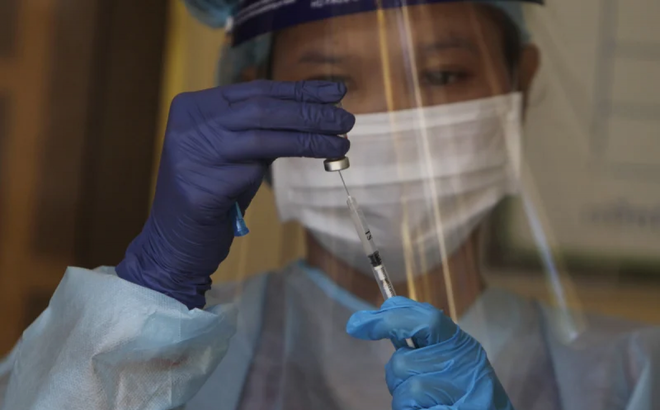
Má nhìn động tác đưa vô run run là thấy nghi rồi!ngacnhien quả này vào bv rạch be bét mới lấy ra được quá. Kim 1ml nhỏ vl
Kim tự rút mà
 
all in WHO, 1 thận ăn 1 thận rưỡi
WHO cơ hội cao đoạt Nobel Hòa bình 2021
WHO được đánh giá là ứng viên có khả năng đoạt giải Nobel Hòa bình 2021 cao nhất, sau 18 tháng cơ quan này dốc sức chống đại dịch Covid-19.

Các công ty cá cược Anh Betfair và William Hill ngày 2/10 quy định tỷ lệ đặt cược cho chiến thắng của Tổ chức Y tế Thế giới (WHO) lần lượt là 4 ăn 5 và 4 ăn 6, cho thấy họ nhận định cơ quan thuộc Liên Hợp Quốc này là ứng viên sáng giá nhất cho giải Nobel Hòa Bình 2021.

Các ứng viên khác được nhà cái xếp tỷ lệ đặt cược cao gồm thủ lĩnh phe đối lập Nga Alexey Navalny, Thủ tướng New Zealand Jacinda Ardern và nhà hoạt động môi trường Thụy Điển Greta Thunberg.

Năm ngoái, WHO cũng được đề cử giải Noble Hòa bình, nhưng giải thưởng danh giá này cuối cùng được trao cho Chương trình Lương thực Thế giới, cũng thuộc LHQ, với thành tích giúp gần 100 triệu người ở 88 quốc gia khác nhau.

WHO dường như nhận được nhiều sự ủng hộ cho giải Nobel Hòa bình năm nay, sau gần hai năm dẫn dắt thế giới ứng phó với đại dịch Covid-19. WHO cũng là cơ quan chịu trách nhiệm điều hành Covax, sáng kiến phân phối công bằng vaccine Covid-19 toàn cầu.

556318717813648a-WHO-3197-1633232683.jpg

Trụ sở WHO tại thành phố Geneva, Thụy Sĩ tháng 2/2020. Ảnh: Reuters.

Tuy nhiên, không phải mọi người đều tin rằng WHO sẽ nhận giải Nobel Hòa bình năm nay. Dan Smith, giám đốc Viện Nghiên cứu Hòa bình Quốc tế Stockholm (SIPRI), cho hay sẽ rất ngạc nhiên nếu WHO được trao giải. Ông cho rằng các nhóm nghiên cứu vaccine Covid-19 cũng khó nhận giải Nobel Hòa bình do đã có giải thưởng cho lĩnh vực y học.

Ủy ban Nobel Na Uy hàng năm trao giải Nobel Hòa bình cho cá nhân hoặc tổ chức vì nỗ lực và hành động xuất sắc trong thúc đẩy hòa bình thế giới. 329 ứng viên được đề cử giải Nobel Hòa bình năm nay, gồm 234 cá nhân và 95 tổ chức. Giải thưởng sẽ được công bố ngày 8/10 tại thành phố Oslo.

Khi Alfred Nobel qua đời năm 1896, ông để lại khoản tài sản khổng lồ và muốn dùng một phần số tiền này để trao giải "cho những người mang lại lợi ích lớn nhất cho nhân loại trong một năm trước".

Di chúc của Nobel cho biết giải thưởng sẽ trao cho các lĩnh vực vật lý, hóa học, y học hoặc sinh lý học, văn học và hòa bình. Giải Nobel Hòa bình nên trao cho "những người đóng góp nhiều nhất hoặc thực hiện công việc tốt nhất nhằm thắt chặt tình bằng hữu giữa các quốc gia, bãi bỏ hoặc cắt giảm quân đội thường trực hoặc xúc tiến các hội nghị hòa bình", di chúc có đoạn.

alô alô @Gilles cu ơi

 
Sang voz đọc toàn nghiên cứu đá nhau về mức độ kháng thể sau x tháng, có vẻ để rộng đường cho liều 3
 
Sang voz đọc toàn nghiên cứu đá nhau về mức độ kháng thể sau x tháng, có vẻ để rộng đường cho liều 3
Vđ là giờ 1-2 còn không đủ :(
Giờ chỉ trông vào :
-1 sputnik gia công và dự kiến chuyển giao chế tạo
- nanocovax, hoặc 1 2 loại vaccine nội địa
- vaccine cuba chuyển giao
 
Back
Top