
- 5/6/03
- 32,085
- 17,921
vđ làCó những thằng đọc đéo qua nổi cái headlines nhưng phán như đúng rồi
muốn có nature immue thì phải nhiễm cái đã

mà xác suất tạch thì cao vkl so với ko tiêm



Follow along with the video below to see how to install our site as a web app on your home screen.
Note: This feature may not be available in some browsers.
vđ làCó những thằng đọc đéo qua nổi cái headlines nhưng phán như đúng rồi

Có những thằng đọc đéo qua nổi cái headlines nhưng phán như đúng rồi

vđ là
muốn có nature immue thì phải nhiễm cái đã
mà xác suất tạch thì cao vkl so với ko tiêm

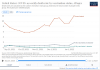
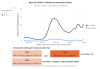


H Mẽo ngày còn 9k ca mới, bằng 1/10 VN
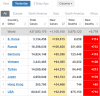


Nó nhìn Việt Nam leo top thế giới nên không muốn sa vào vũng đấy bác ơiChinavac là nước cất à
View attachment 387438


Cái này rõ ràng rối mà. Từ wave 1 vài người quen của mình dính 1 phát là phải nói là "thở ko ra hơi" gần 2 năm mới đỡPhân tích tổng hợp cho thấy nhiễm covid, kể cả nhẹ, cũng làm tăng biến cố tim mạch sau một năm (đột quỵ, nhồi máu cơ tim, suy tim ...). Có nên coi covid 19 là yếu tố nguy cơ bệnh tim mạch mới?
https://jamanetwork.com/journals/ja...1&utm_campaign=article_alert&linkId=154601351
The COVID Heart—One Year After SARS-CoV-2 Infection, Patients Have an Array of Increased Cardiovascular Risks

Phân tích tổng hợp cho thấy nhiễm covid, kể cả nhẹ, cũng làm tăng biến cố tim mạch sau một năm (đột quỵ, nhồi máu cơ tim, suy tim ...). Có nên coi covid 19 là yếu tố nguy cơ bệnh tim mạch mới?
https://jamanetwork.com/journals/ja...1&utm_campaign=article_alert&linkId=154601351
The COVID Heart—One Year After SARS-CoV-2 Infection, Patients Have an Array of Increased Cardiovascular Risks
Mũi 3 hiện nay chưa dùng để chống Omicron thì phải, vậy mới có chuyện chuẩn bị mũi 4https://www.nejm.org/doi/full/10.1056/NEJMoa2119451.
Hiệu lực của vaccine với Omicron không cao, kể cả với 3 mũi vaccine..
CONCLUSIONS
Primary immunization with two doses of ChAdOx1 nCoV-19 or BNT162b2 vaccine provided limited protection against symptomatic disease caused by the omicron variant. A BNT162b2 or mRNA-1273 booster after either the ChAdOx1 nCoV-19 or BNT162b2 primary course substantially increased protection, but that protection waned over time.

Mà dính r thì cần gì nữa. VN h Omicron rMũi 3 hiện nay chưa dùng để chống Omicron thì phải, vậy mới có chuyện chuẩn bị mũi 4
For people who never got COVID, what are the odds they never will? Here’s what experts say

1of2
Pedestrians, some wearing masks, some not, walk along the waterfront in San Francisco’s Fisherman’s Wharf neighborhood. About 43% of people in the U.S., or about 140 million people, have been infected with the coronavirus, the federal government estimates.
Laura Morton/Special to The Chronicle

As pandemic restrictions ease, some of the estimated 57% of Americans who have not yet contracted the virus may be wondering: If I start to live more like normal — going mask-free at restaurants, shopping and even parties — what are the odds that I will never get COVID-19?
The Centers for Disease Control and Prevention recently estimated that around 43% of people in the U.S., or about 140 million people, have been infected with the coronavirus, which leaves almost 60% never having had it. The estimate counts each person once, so some of the more than 140 million Americans estimated to have had COVID may have been infected more than once.
While during the omicron surge experts and public health officials cautioned that the highly contagious variant would infect many people, they don’t think ending up with the virus is inevitable, at least in the near future. But, they say, it’s going to require a fine balance as we transition into the endemic stage of COVID-19.
“From my perspective, no, it’s not inevitable” over the next year or two, said UCSF Chair of Medicine Dr. Bob Wachter, who also hasn’t gotten COVID yet. He said when case rates are low, as they are now in the Bay Area, the roughly 60% of the population that has not had COVID is unlikely to get it, “since they won’t be exposed very much.”
Those who are vaccinated and boosted, he added, “will remain relatively protected even if they do get exposed.”
Dr. Peter Chin-Hong, an infectious disease specialist at UCSF, agreed, adding that as long as we’re in the transition period into the endemic stage of the virus, there’s no clear answer for whether you’ll inevitably get COVID in the long run — but it doesn’t have to be now.
“Are we all going to get it? Yes, biologically, that might happen,” he said. “Are we at a time to embrace that philosophy? No, because the virus is still causing a lot of suffering. Almost 2,000 deaths per day is no walk in the park.”
But Chin-Hong and other experts agree that — with some vigilance — it’s still possible to avoid the virus while enjoying life.
Chin-Hong said for him, that means still “engaging with life, still eating indoors and all that stuff,” but still having his “spider sense” up for risky situations. For example, if case counts are high like they were in January, “I’m not going to jump up and down in a crowded room,” he said.
“It’s a fine balance between anxiety and wanting to go back to what you lost in the last few years, and that balance is tough,” he added.
Dr. Abraar Karan, an infectious disease expert at Stanford, also said that easing restrictions doesn’t have to — and shouldn’t — mean inevitable infection.
“Fundamentally, I still think there are things we can get safer,” he said, adding the government has an obligation to help people move more toward a normal-seeming life while staying safe by doing things like improving ventilation in buildings, especially places like schools, and to make testing and N95 masks widely available for those who need them.
He noted that for people who are risk averse, immunocompromised or otherwise trying to avoid infection altogether, a high-quality N95 mask allows you to do things like go to the gym or shop and be relatively well protected.
Experts also said there are benefits to avoiding infection for now, even if it’s possible you contract the coronavirus later: The longer the pandemic goes on, the more we understand about the virus, they said, which means that treatments are likely to be better and more accessible.
“Delaying infections is actually an undervalued or underappreciated point,” Karan said. “Who knows what we’ll have six months or a year from now, right? We’ll have even more things that we can offer patients.”
While there are no guarantees in a pandemic, experts said, the most important thing is for people to start finding ways to return to life while staying flexible as the virus continues to fluctuate.
“Even for the highest risk population, there’s a balance,” Chin-Hong said. “It’s about engaging with life and not being lonely, but also being responsible at all levels.”

5G là sao nhỉ?

thôi nghỉ, đau đầu rồiView attachment 394947
Đại khái graphene oxide có trong vaccine của Pfizer, sau này có thể cộng hưởng với sóng 5G sẽ thành thứ giết người.
Đấy là "bác sĩ nổi tiếng" và đám bợ đít nói thế, chứ không nói chả ai biết đây là bác sĩ nổi tiếng
Cái này đúng chuyên môn của e nhè.https://www.facebook.com/gracie.phan/posts/10166018308765290
Chia sẻ của 1 bác sĩ nổi tiếng ở VN còn khá trẻ vừa trải qua cơn đột quỵ. Đặc biệt đoạn cuối có nói 1 câu ẩn ý "Hãy bỏ 5G"


