

Navigation
Install the app
How to install the app on iOS
Follow along with the video below to see how to install our site as a web app on your home screen.
Note: This feature may not be available in some browsers.
Thêm tùy chọn
Style variation
You are using an out of date browser. It may not display this or other websites correctly.
You should upgrade or use an alternative browser.
You should upgrade or use an alternative browser.
[Zing]Topic Covid-19 ở nước ngoài. US THIÊN HẠ ĐỆ NHẤT
- Thread starter vuongquang007
- Ngày gửi


- 30/3/07
- 19,543
- 24,036
Đọc bằng R hay gì đại loại ấy. Mở excel treo máy chết cụ.COVID-19_Case_Surveillance_Public_Use_Data_with_Geography
mới tải cái file CSV về covid ở US mà nó nặng 4.5 GB
ko dám mở = excel kiểm tra luôn
View attachment 368577
32.806.678 rows

- 2/6/08
- 14,001
- 14,177
Excel chắc chắn ko xem đc đâu, đút vào Tableau hay mấy cái tool data ấyCOVID-19_Case_Surveillance_Public_Use_Data_with_Geography
mới tải cái file CSV về covid ở US mà nó nặng 4.5 GB
ko dám mở = excel kiểm tra luôn
View attachment 368577
32.806.678 rows


- 5/6/03
- 32,400
- 18,080
Excel chắc chắn ko xem đc đâu, đút vào Tableau hay mấy cái tool data ấy
power biĐọc bằng R hay gì đại loại ấy. Mở excel treo máy chết cụ.
đang load lên Azure
cái bảng này là data "từng cá nhân" của 30tr người nhiễm covid tại mẽo

- 20/1/09
- 15,581
- 6,600
power bi
đang load lên Azure
cái bảng này là data "từng cá nhân" của 30tr người nhiễm covid tại mẽo
ồ way1... Cái này cũng public ra được à

- 5/6/03
- 32,400
- 18,080
ko có thông tin cụ thể đâuồ way1... Cái này cũng public ra được à
chỉ có bang/ hạt/ độ tuổi/ nhóm dân blah blah
đẩy lên azurre, mới có gần 4tr dòng
mà chạy cái query hết 2p

30tr chắc chờ dài cổ
Chỉnh sửa cuối:

Storm_Dance
Glory to Mankind
- 21/10/16
- 21,059
- 21,797
https://www.researchsquare.com/article/rs-1003006/v1
https://www.theatlantic.com/science...rch-problems/620473/?utm_source=pocket-newtab
https://www.theatlantic.com/science...rch-problems/620473/?utm_source=pocket-newtab
The Real Scandal About Ivermectin
Claims about the drug are based on shoddy science—but that science is entirely unremarkable in its shoddiness.
By James Heathers
The Atlantic
OCTOBER 23, 2021
Ivermectin is an antiparasitic drug, and a very good one. If you are infected with the roundworms that cause river blindness or the parasitic mites that cause scabies, it is wonderfully effective. It is cheap; it is accessible; and its discoverers won the Nobel Prize in 2015. It has also been widely promoted as a coronavirus prophylactic and treatment.
This promotion has been broadly criticized as a fever dream conceived in the memetic bowels of the internet and as a convenient buttress for bad arguments against vaccination. This is not entirely fair. Perhaps 70 to 100 studies have been conducted on the use of ivermectin for treating or preventing COVID-19; several dozen of them support the hypothesis that the drug is a plague mitigant. Two meta-analyses, which looked at data aggregated across subsets of these studies, concluded that the drug has value in the fight against the pandemic.
So if you’re the sort of person who “follows the science,” it might seem perfectly rational to join the fervent supporters of ivermectin. It might even strike you as reasonable to suggest, as one physician and congressional witness did recently, that “people are dying because they don’t know about this medicine.”
The problem is, not all science is worth following.
I work on a small team of researchers who do what one might call “forensic peer review.” In the standard process for scientific publishing, peer reviewers take a manuscript mostly at face value: They ensure that the study makes sense as it’s described. We do something else: We check everything, and try to ferret out any potential biases in reported patterns of digits, statistical impossibilities, inconsistencies between what researchers said they’d do and what they actually did, and plagiarized sentences or paragraphs. And we often find fatal flaws hidden behind a veil of two-dollar words and statistical jargon.
The ivermectin literature has been no exception. Over the past six months, we’ve examined about 30 studies of the drug’s use for treating or preventing COVID-19, focusing on randomized studies, or nonrandomized ones that have been influential, with at least 100 participants. We’ve reached out directly to the authors of these studies to discuss our findings, sometimes engaging in lengthy back-and-forths; when appropriate, we’ve sent messages to the journals in which studies have been published. In our opinion, a bare minimum of five ivermectin papers are either misconceived, inaccurate, or otherwise based on studies that cannot exist as described. One study has already been withdrawn on the basis of our work; the other four very much should be.
Read: Scientific publishing is a joke
In the withdrawn study, a team in Egypt compared outcomes among COVID-19 patients who did and did not receive ivermectin—but, for the latter group, they included deaths that had occurred before the study began. (According to the journal Nature, the lead author “defended the paper” in an email, and claimed that the withdrawal took place without his knowledge. He did not respond to an inquiry from The Atlantic.) Other papers also have egregious flaws. Researchers in Argentina said they recruited participants from hospitals that had no record of having participated in the research, and then blamed mistakes on a statistician who claimed never to have been consulted. A few studies show clear evidence of severe data irregularities. In one from Lebanon, for example, the same section of patient records repeats over and over again in the data set, as if it had been copied and pasted. (An author on that paper conceded that the data were flawed, and claimed to have requested a retraction.)
All of the above may not sound that bad. If five out of 30 trials have serious problems, perhaps that means the other 25 are up to snuff. That’s 83 percent! You might be tempted to think of these papers as being like cheaply made light bulbs: Once we’ve discarded the duds with broken filaments, we can just use the “good” ones.
That’s not how any of this works. We can locate obvious errors in a research paper only by reanalyzing the numbers on which the paper is based, so it’s likely that we’ve missed some other, more abstract problems. Also, we have only so much time in the day, and forensic peer review can take weeks or months per paper. We don’t pick papers to examine at random, so it’s possible that the data from the 30 papers we chose are somewhat more reliable, on average, than the rest. A better analogy would be to think of the papers as new cars: If five out of 30 were guaranteed to explode as soon as they entered a freeway on-ramp, you would prefer to take the bus.
Most problematic, the studies we are certain are unreliable happen to be the same ones that show ivermectin as most effective. In general, we’ve found that many of the inconclusive trials appear to have been adequately conducted. Those of reasonable size with spectacular results, implying the miraculous effects that have garnered so much public attention and digital notoriety, have not.
Given all the care that goes into maintaining scientific literature, how did this house of cards acquire planning permission? The answer is that the pandemic has created a very difficult environment for scientific publishing. In early 2020, a hunger for high-quality information arose immediately. How scared of the coronavirus should we be, and how should we behave? How does the virus spread? How dangerous is it? What decisions should governments make? To answer those questions, scientific studies were produced at record pace, peer-reviewed almost immediately after they were submitted or else put into the public domain via preprint as soon as they had been completed. Publishing science is slow; highly contagious diseases are fast.
It’s not that, under such conditions, a few bad studies were bound to slip through the net. Rather, there is no net. Peer review, especially when conducted at pandemic speed, does not exert the rather boring scientific scrutiny needed to identify the problems described above. Forensic work like ours is not organized by scientific journals. We do not get paid. We are not employed by universities, hired by governments, or supported by private money to do this. We do it because we feel it should be done.
Read: A credibility crisis in food science
As volunteers, we have no inherent authority. When we ask a research group for access to its original data, in accordance with a long-held standard for maintaining scientific integrity, our requests are commonly refused or ignored. And when we do find what we think are serious anomalies in a given paper, getting the authors, the institutions they work for, or their publication outlets to return our emails tends to be somewhere between challenging and impossible. When we looked at an ivermectin study published over the summer in the Asian Pacific Journal of Tropical Medicine, for example, we found a highly unusual pattern of numbers that implied a failure of randomization. We reported this issue to the journal more than three months ago and have heard nothing substantive back. One of the journal’s executive editors in chief, Bo Cui, told The Atlantic that the study “represents the best available evidence at the time of publication and has undergone scientific peer review and editor review before its publication”; he also said that the journal has asked the authors to address “the randomization issue” and that any eventual retraction would come only after “due process, free from coercion or pressure.” The study’s lead author, Morteza Niaee, told The Atlantic via email that the randomization procedure was “completely acceptable and well-performed.”
This is a consistent theme in our work. We contact the authors of each paper, along with the journal or preprint service where their work is published, long before these issues are discussed in public. Sometimes, the authors or journals even reply, although these communications rarely result in any kind of investigation, let alone a serious consideration of the issues raised.
In this environment, no sinister conspiracy is needed to allow for the construction of an irreparably flawed body of literature. In fact, the suspect quality of the ivermectin/COVID-19 literature may be alarmingly commonplace. Remember, our low estimate is that about 17 percent of the major ivermectin trials are unreliable. John Carlisle, famous in metascientific circles for identifying the most prolific research fraud in the history of medical research—the case of Yoshitaka Fujii, an anesthesiologist who managed to garner an astonishing 183 retractions—reviewed more than 500 trials submitted to the journal Anaesthesia in the three years leading up the pandemic and concluded that 14 percent of them contained false data. A 2012 survey of researchers at five academic medical centers in Belgium reported that 1 percent admitted to having fabricated data in the prior three years, though 24 percent said they had observed a colleague doing so. A meta-analysis on the same topic concluded, similarly, that 2 percent of researchers admit to having engaged in serious misconduct while 14 percent say they have observed it in a colleague.
Richard Smith, the former editor of the British Medical Journal, suggested in July that the scientific community is long past due for a reckoning on the prevalence of false data in the literature. “We have now reached a point where those doing systematic reviews must start by assuming that a study is fraudulent until they can have some evidence to the contrary,” he wrote. This is less hostile than it sounds. Smith isn’t saying that everything is fraudulent, but rather that everything should be evaluated starting from a baseline of “I don’t believe you” until we definitely see otherwise. Think of the airport-security workers who assume that you may be carrying contraband or weapons until you prove that you aren’t. The point is not that everyone is armed but that everybody has to go through the machine.
Yet it has not yet sunk in to the public consciousness that our system for building biomedical knowledge largely ignores any evidence of widespread misconduct. In other words, the literature on ivermectin may be quite bad—and in being so, it may also be quite unremarkable.
If this is the case, how does medical science manage to navigate all the bad research? How have we not returned to the ages of leeches and bloodletting?
The secret, again, is simple: Much research is simply ignored by other scientists because it either looks “off” or is published in the wrong place. A huge gray literature exists in parallel to reliable clinical research, including work published in low-quality or outright predatory journals that will publish almost anything for money. Likewise, the authors of fabricated or heavily distorted papers tend to have modest ambitions: The point is to get their work in print and added to their CV, not to make waves. We often say these studies are designed to be “written but not read.”
Although some of the papers we examined may claim, for instance, that ivermectin is a perfect COVID-19 prophylactic, they do so based on a smallish study of a few hundred people—and the work is published in journals that during pre-pandemic times would have been deeply obscure. When a group claims to have reviewed, say, 100,000 patient records—and then publishes its dubious results in a high-profile journal—the risks are significant.
In a pandemic, when the stakes are highest, the somewhat porous boundary between these publication worlds has all but disappeared. There is no gray literature now: Everything is a magnet for immediate attention and misunderstanding. An unbelievable, inaccurate study no longer has to linger in obscurity; it may bubble over into the public consciousness as soon as it appears online, and get passed around the internet like a lost kitten in a preschool. An instantly forgettable preprint, which would once have been read by only a few pedantic experts, can now be widely shared among hundreds of thousands on social media.
And our work will begin all over again.
The fact that there is no true institutional vigilance around a research literature that affects the health of nations, that it is necessary for us to do this, is obscene. It is a testament to how badly the scientific commons are managed that their products are fact-checked for the first time by a group of weary volunteers.
James Heathers is the chief scientific officer at Cipher Skin, and has a doctorate in physiological-signal methodology.

- 22/8/05
- 4,540
- 5,479
Tầm mấy vạn người MĨ - anti vaccine nhưng thích chữa bằng nó, kẽm, vitamin C D liều cao gì đó... hỏi dẫn chứng ở đâu hay ai kê toa thì không nói hay là tin FB, ko bác sĩ nào ở bệnh viện cho mà phải ra mấy chỗ điều trị giảm nhẹ - nơi chờ chết mới được dùng như 1 biện pháp cuối cùng


- 14/9/05
- 8,190
- 6,278
https://vnexpress.net/bac-kinh-huy-hang-tram-chuyen-bay-vi-covid-19-4378821.html
Các sân bay tại Bắc Kinh phải hủy hàng trăm chuyến do quy định đi lại được siết chặt khắp Trung Quốc để ứng phó Covid-19.
Các sân bay tại Bắc Kinh phải hủy hàng trăm chuyến do quy định đi lại được siết chặt khắp Trung Quốc để ứng phó Covid-19.

Shay Patrick Cormac
Liu Kang, Champion of Earthrealm
- 15/8/17
- 5,050
- 3,722
Một biến chủng nCoV có khả năng kháng vaccine Pfizer, AstraZeneca
Biến chủng này mới chỉ được tìm thấy ở 5 mẫu bệnh phẩm trên thế giới. Song, nó vẫn được cảnh báo có thể kháng lại vaccine Covid-19 nhờ đột biến nguy hiểm.
https://zingnews.vn/mot-bien-chung-...g-vaccine-pfizer-astrazeneca-post1274007.html
Biến chủng này mới chỉ được tìm thấy ở 5 mẫu bệnh phẩm trên thế giới. Song, nó vẫn được cảnh báo có thể kháng lại vaccine Covid-19 nhờ đột biến nguy hiểm.
https://zingnews.vn/mot-bien-chung-...g-vaccine-pfizer-astrazeneca-post1274007.html

- 6/5/08
- 8,857
- 11,325
https://www.newscientist.com/articl...d-19-vaccine-may-work-better-than-injections/
Miếng dán chích vaccine COVID-19 có thể có tác dụng tốt hơn kim tiêm, theo thí nghiệm trên chuột
https://www.cidrap.umn.edu/news-per...erely-allergic-people-tolerate-covid-vaccines
Hầu hết người bị dị ứng nghiêm trọng đều chịu được vaccine COVID
Miếng dán chích vaccine COVID-19 có thể có tác dụng tốt hơn kim tiêm, theo thí nghiệm trên chuột
https://www.cidrap.umn.edu/news-per...erely-allergic-people-tolerate-covid-vaccines
Hầu hết người bị dị ứng nghiêm trọng đều chịu được vaccine COVID
- 5/6/03
- 32,400
- 18,080
Religious Vaccine Exemptions: What Are They & How Do They Work?
Angry about all the people using religious exemptions to avoid getting the covid vaccine? Blame the first amendment.
lắm trò thật
- 22/8/05
- 4,540
- 5,479
Coi cái thread hậu quả của anti vaccine mà tử vong do dịch bên reddit thì cái Religious Vaccine Exemptions này bị chửi dữ lắm.
Nó như câu chuyện God gửi 1 con thuyền, can nô lội nước, máy bay trực thăng tới cứu 1 đứa bị chết đuối mà nó từ chối để rồi hỏi God trên thiên đường là sao lại không cứu nó vậy
Chỉnh sửa cuối:

- 22/8/21
- 13,810
- 10,480
Chết hết là hết lây bệnh thôi mà 
Làm thế nào Ấn Độ đánh bại được Covid-19?
30/10/2021 09:58 GMT+7
Virus corona dường như đã kiệt sức sau khi tung hoành ở quốc gia đông dân thứ hai trên thế giới này, tờ The Economist nhận định.
Ấn Độ mở nhạc, chiếu phim mừng cán mốc tiêm 1 tỷ liều vắc xin Covid-19
WHO ra khuyến cáo mới về Covid-19
Ấn Độ sẽ xuất khẩu 8 triệu liều vắc xin cho châu Á
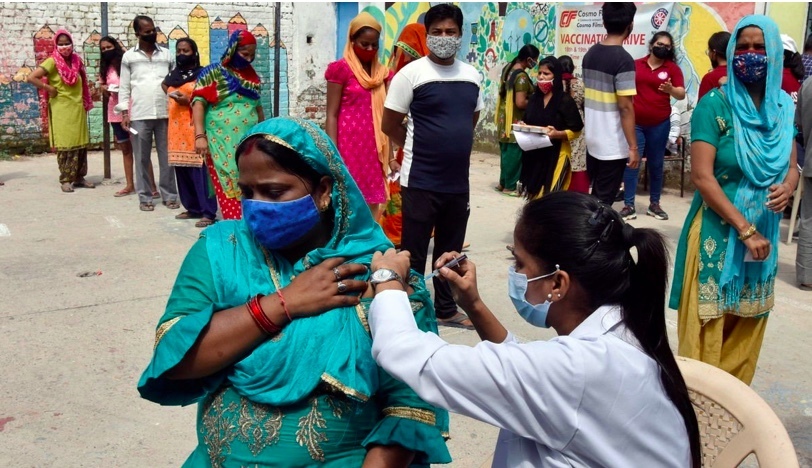
Chiến dịch tiêm chủng ở Ấn Độ dù chậm chạp nhưng đã đạt được các tiến bộ nhất định. Ảnh: The Economist
Chỉ vài tháng sau khi hệ thống y tế công sụp đổ vì trận sóng thần lây nhiễm Covid-19, Ấn Độ đã có lý do để ăn mừng. Ngày 21/10, Thủ tướng Narendra Modi tuyên bố Ấn Độ đã tiêm liều vắc xin thứ một tỷ. Tại các thành phố như New Delhi hay Mumbai, số phòng bệnh dành riêng cho việc điều trị Covid-19 hầu như trống rỗng.
Một bác sĩ tại một bệnh viện lớn của Chính phủ Ấn Độ thậm chí còn nói đùa rằng, nhiễm virus corona tại New Delhi hiện giờ khó hơn nhiều so với bất cứ đâu trên thế giới. Nền kinh tế Ấn Độ vẫn bất ổn nhưng hầu hết các chỉ số thị trường chứng khoán đều đạt tầm cao mới vào mùa hè.
Tuy nhiên, cảm giác nhẹ nhõm có thể cảm nhận này vẫn khó có thể so sánh với những ký ức gần đây về các ca tử vong hàng loạt và việc nhiều thi thể được chôn vội vã dọc theo sông Hằng.
Hồi tháng 4 và 5, cả thế giới lo lắng dõi theo tình hình ở Ấn Độ, khi số ca nhiễm tăng gần như dựng đứng. Nước này bị ảnh hưởng bởi làn sóng bùng phát đầu tiên của biến thể Delta, người Ấn Độ tử vong nhiều không kể xiết. Có thông tin cho rằng có tới 2,3 triệu người Ấn Độ đã thiệt mạng vì Covid-19.
Những người sống sót cho rằng chính phủ đã chậm trễ trong việc mua vắc xin, khi mà Ấn Độ coi mình là nhà máy sản xuất dược phẩm cho thế giới. Tỷ lệ tiêm chủng trong tình trạng từ nhỏ giọt đến nhỏ giọt thất thường khi các hệ thống của mọi loại hình đều ngừng hoạt động.
Tới tháng 6, khi làn sóng lây nhiễm tăng vọt, việc tiêm chủng bị chậm lại. Chưa tới 10% dân số nước này được tiêm phòng. Tuy nhiên, chỉ trong vòng hai tuần, số ca lây nhiễm giảm về mức trước khi biến thể Delta hoành hành. Không nhờ bất kỳ can thiệp y tế nào.
Một cuộc khảo sát về mẫu máu được công bố trong tuần này cho thấy, hơn 90% cư dân New Delhi đã có kháng thể chống Covid-19. Sau khi vượt qua khủng hoảng ở thời điểm tồi tệ nhất, người Ấn Độ đã an toàn nhờ miễn dịch tự nhiên. Chiến dịch tiêm chủng ở Ấn Độ, dù chậm chạp nhưng đã đạt được các tiến bộ nhất định.
Hơn 1/2 dân số Ấn Độ đã được tiêm ít nhất một liều vắc xin và gần 25% được coi là đã tiêm phòng đầy đủ. Đây là một điều tốt ngay cả khi miễn dịch tự nhiên suy yếu.
Hiện nay, Chính phủ Ấn Độ tiêm vắc xin cho 6 triệu người mỗi ngày và theo dõi 150.000 bệnh nhân đang dương tính với virus corona. Với tốc độ tiến triển hiện tại, Ấn Độ sẽ bảo vệ được mình trước làn sóng thứ ba khi nó tái diễn theo chu kỳ.
Không có thêm cuộc thảo luận về nào về việc ngăn chặn hay nhổ tận gốc virus corona. Với hầu hết những người duy trì được sức khỏe và nghề nghiệp của mình qua năm nghiệt ngã này, cuộc sống đang trở lại bình thường.
Một lần nữa, Ấn Độ có thể rời khỏi vị trí dẫn đầu khi phần còn lại của thế giới tự điều chỉnh để phù hợp với bệnh đặc hữu Covid-19.
Làm thế nào Ấn Độ đánh bại được Covid-19?
30/10/2021 09:58 GMT+7
Virus corona dường như đã kiệt sức sau khi tung hoành ở quốc gia đông dân thứ hai trên thế giới này, tờ The Economist nhận định.
Ấn Độ mở nhạc, chiếu phim mừng cán mốc tiêm 1 tỷ liều vắc xin Covid-19
WHO ra khuyến cáo mới về Covid-19
Ấn Độ sẽ xuất khẩu 8 triệu liều vắc xin cho châu Á
Chiến dịch tiêm chủng ở Ấn Độ dù chậm chạp nhưng đã đạt được các tiến bộ nhất định. Ảnh: The Economist
Chỉ vài tháng sau khi hệ thống y tế công sụp đổ vì trận sóng thần lây nhiễm Covid-19, Ấn Độ đã có lý do để ăn mừng. Ngày 21/10, Thủ tướng Narendra Modi tuyên bố Ấn Độ đã tiêm liều vắc xin thứ một tỷ. Tại các thành phố như New Delhi hay Mumbai, số phòng bệnh dành riêng cho việc điều trị Covid-19 hầu như trống rỗng.
Một bác sĩ tại một bệnh viện lớn của Chính phủ Ấn Độ thậm chí còn nói đùa rằng, nhiễm virus corona tại New Delhi hiện giờ khó hơn nhiều so với bất cứ đâu trên thế giới. Nền kinh tế Ấn Độ vẫn bất ổn nhưng hầu hết các chỉ số thị trường chứng khoán đều đạt tầm cao mới vào mùa hè.
Tuy nhiên, cảm giác nhẹ nhõm có thể cảm nhận này vẫn khó có thể so sánh với những ký ức gần đây về các ca tử vong hàng loạt và việc nhiều thi thể được chôn vội vã dọc theo sông Hằng.
Hồi tháng 4 và 5, cả thế giới lo lắng dõi theo tình hình ở Ấn Độ, khi số ca nhiễm tăng gần như dựng đứng. Nước này bị ảnh hưởng bởi làn sóng bùng phát đầu tiên của biến thể Delta, người Ấn Độ tử vong nhiều không kể xiết. Có thông tin cho rằng có tới 2,3 triệu người Ấn Độ đã thiệt mạng vì Covid-19.
Những người sống sót cho rằng chính phủ đã chậm trễ trong việc mua vắc xin, khi mà Ấn Độ coi mình là nhà máy sản xuất dược phẩm cho thế giới. Tỷ lệ tiêm chủng trong tình trạng từ nhỏ giọt đến nhỏ giọt thất thường khi các hệ thống của mọi loại hình đều ngừng hoạt động.
Tới tháng 6, khi làn sóng lây nhiễm tăng vọt, việc tiêm chủng bị chậm lại. Chưa tới 10% dân số nước này được tiêm phòng. Tuy nhiên, chỉ trong vòng hai tuần, số ca lây nhiễm giảm về mức trước khi biến thể Delta hoành hành. Không nhờ bất kỳ can thiệp y tế nào.
Một cuộc khảo sát về mẫu máu được công bố trong tuần này cho thấy, hơn 90% cư dân New Delhi đã có kháng thể chống Covid-19. Sau khi vượt qua khủng hoảng ở thời điểm tồi tệ nhất, người Ấn Độ đã an toàn nhờ miễn dịch tự nhiên. Chiến dịch tiêm chủng ở Ấn Độ, dù chậm chạp nhưng đã đạt được các tiến bộ nhất định.
Hơn 1/2 dân số Ấn Độ đã được tiêm ít nhất một liều vắc xin và gần 25% được coi là đã tiêm phòng đầy đủ. Đây là một điều tốt ngay cả khi miễn dịch tự nhiên suy yếu.
Hiện nay, Chính phủ Ấn Độ tiêm vắc xin cho 6 triệu người mỗi ngày và theo dõi 150.000 bệnh nhân đang dương tính với virus corona. Với tốc độ tiến triển hiện tại, Ấn Độ sẽ bảo vệ được mình trước làn sóng thứ ba khi nó tái diễn theo chu kỳ.
Không có thêm cuộc thảo luận về nào về việc ngăn chặn hay nhổ tận gốc virus corona. Với hầu hết những người duy trì được sức khỏe và nghề nghiệp của mình qua năm nghiệt ngã này, cuộc sống đang trở lại bình thường.
Một lần nữa, Ấn Độ có thể rời khỏi vị trí dẫn đầu khi phần còn lại của thế giới tự điều chỉnh để phù hợp với bệnh đặc hữu Covid-19.

empireatwar
Crash Bandicoot
- 20/7/08
- 12,681
- 10,636
Ấn độ thì bá rồi, đang 500k ca tụt cái bụp còn 40k, khỏi bệnh 8 90k 1 ngày, covid tuổi lền
- 22/8/05
- 4,540
- 5,479
Chư Thần Ấn Độ vẫn phù hộ dân mờ !Ấn độ thì bá rồi, đang 500k ca tụt cái bụp còn 40k, khỏi bệnh 8 90k 1 ngày, covid tuổi lền

z3r0_hien_lanh
SEKIRO「隻腕の狼」
- 27/8/06
- 22,472
- 9,622
Cũng die nhiều mà công nhân nghành mẽo ko giảm bn nhể
empireatwar
Crash Bandicoot
- 20/7/08
- 12,681
- 10,636
Mẽo ta nghĩ số liệu có vẻ khá hơn bọn kia vì bọn dược nó vẫn cần số liệu để nghiên cứu tiếp

- 24/7/09
- 706
- 858
Nay bên Nhật đi chơi Halloween đông dữ dội luôn, đúng ra đông từ hqua rồi, nay kín mít luôn, có người còn bảo đông nhất kể từ 2020 đến giờ (đông hơn cả lễ năm mới ). Đúng kiểu thả cửa , bây giờ qua 12h đêm rồi mà vẫn còn đông
). Đúng kiểu thả cửa , bây giờ qua 12h đêm rồi mà vẫn còn đôngSimilar threads
- Trả lời
- 0
- Đọc
- 132
- Trả lời
- 0
- Đọc
- 67

- Trả lời
- 0
- Đọc
- 156
- Trả lời
- 0
- Đọc
- 144